Japan Alcohol Label Requirements: The Complete Compliance Checklist
 By
By 
Getting your label right is one of the most important steps when preparing to sell alcohol in Japan. A compliant label helps your shipment clear customs on schedule. A non-compliant label can leave an entire shipment in bond. This guide covers japan alcohol label requirements and explains what your artwork needs before the product can legally reach a Japanese shelf.
The dual-labeling system overview
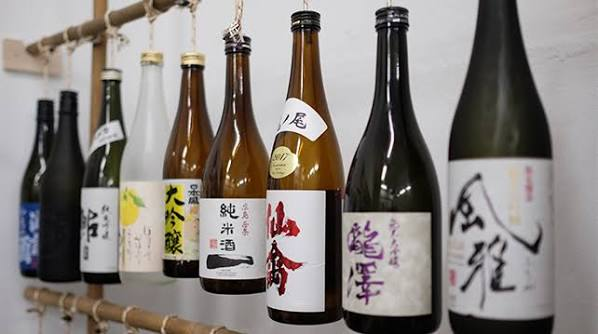
What the regulation requires
A Japanese alcohol label must satisfy two legal frameworks. The Food Labeling Act, together with the Food Sanitation Act, covers ingredients, allergens, and general food-safety information. The Liquor Tax Act covers tax classification and alcohol-content disclosure.
This does not mean you need two separate labels. Instead, one label must meet both sets of requirements. This dual structure makes liquor labeling japan more involved than labeling for many other consumer goods.
The most common compliance gaps
The most common gap is treating localization as simple translation. A correctly translated Japanese label can still fail review. It may lack tax-classification details, allergen disclosures, or the correct formatting.
Brands from single-authority labeling systems often underestimate this difference. The Japanese system can require several additional details.
How localization handles it
Proper localization builds the Japanese label around both frameworks from the beginning. The process reviews tax and food-safety requirements together. This approach helps brands find gaps before customs review.
It also reduces the risk of costly corrections and shipment delays.
Mandatory items under the Food Labeling Act
What the regulation requires
The Food Labeling Act requires alcohol labels to disclose ingredients, known allergens, and the name and address of the responsible party in Japan. Other general food-safety information may also apply.
This information forms the food-safety layer of label compliance. It tells consumers what the product contains and identifies the party responsible for it in Japan.
The most common compliance gaps
Brands often underestimate allergen disclosure requirements. This issue can become more complex when products contain less common additives or flavorings.
Another common gap involves the responsible party. Some brands list the foreign manufacturer instead of the Japan-based importer of record.
How localization handles it
A properly localized label identifies the correct Japan-based responsible party. In many cases, this means the importer of record.
The label should also provide complete ingredient and allergen information. Review these details against current Japanese food-labeling standards rather than copying the home-market label without changes.
Mandatory items under the Liquor Tax Act
What the regulation requires
Under the Liquor Tax Act, a label must disclose the beverage’s tax category, alcohol content (ABV), and other classification details tied to how the product is taxed. This information isn’t just informational — it connects directly to the labeling-method notification filed with the tax office, which has to match what’s physically printed on the product before it can be withdrawn from bond.
The most common compliance gaps
A common gap is a mismatch between the ABV or category stated on the label and what was declared in the labeling-method notification — even a small discrepancy can trigger delays. Another is failing to account for category-specific labeling nuances, such as additional requirements for cask-strength spirits or products near ABV thresholds tied to tax surcharges. [VERIFY: current specific ABV thresholds and associated label requirements, as these are subject to periodic reform.]
How localization handles it
Aligning the label’s declared ABV and category with the labeling-method notification filed with the tax office, before the notification is submitted, avoids the mismatch problem entirely. This is a coordination point that benefits from having compliance and labeling handled by the same partner rather than split across separate vendors.
The under-20 warning requirement
What the regulation requires
Every alcohol label sold in Japan must carry a warning against sale or consumption by individuals under 20 years of age. This is a non-negotiable, universal requirement across all alcohol categories, reflecting Japan’s minimum drinking age and the strict enforcement posture around it.
The most common compliance gaps
The gap here is usually one of form rather than omission — brands sometimes include an under-age warning translated loosely from their home market’s phrasing, rather than the specific wording and placement Japanese regulation expects. A warning that exists but doesn’t match the expected form can still draw scrutiny during label review.
How localization handles it
Using the correct, standard Japanese phrasing and placement for the under-20 warning — rather than an approximate translation — is a small but important detail that a partner experienced in Japanese label compliance will apply as a matter of course, not as an afterthought.
Japanese-language requirements
The items that matter most
Beyond specific mandatory disclosures, the overall label needs to present required information in Japanese, in a legible and appropriately formatted way. This includes product name (or a Japanese equivalent/transliteration where relevant), ingredient and allergen information, the responsible party’s name and address, alcohol content, tax category information, and the under-20 warning — all in Japanese.
Why each one is required
These requirements exist to ensure Japanese consumers and regulators alike can read and verify every piece of required information without needing to interpret a foreign-language label. It’s a consumer-protection principle as much as a tax-administration one — nothing critical to a buyer’s understanding of the product should be locked behind a language they may not read.
How to prepare them correctly
This is where working with a partner experienced in Japanese-market label design pays off — not just accurate translation, but formatting that meets legibility and placement expectations reviewers are used to seeing on compliant labels. A label that reads correctly but is formatted unusually can still draw extra scrutiny during review, even when nothing is technically wrong.
A pre-shipment label checklist
The items that matter most
Before finalizing artwork for your first shipment, confirm: Japanese-language ingredient and allergen disclosure; the Japan-based responsible party’s name and address; accurate ABV and tax category information matching your labeling-method notification; the correctly worded under-20 warning; and overall formatting consistent with current Food Labeling Act and Liquor Tax Act expectations.
Why each one is required
Each item on this list ties back to one of the two legal frameworks governing your label, and missing any single one can be enough to stall your shipment at the labeling-method notification or customs-clearance stage — regardless of how compliant the rest of the label is.
How to prepare them correctly
Whether your current label design actually clears every item on this checklist is exactly the kind of thing worth confirming before you commit to a print run or a shipping date — catching a gap on paper is far cheaper than catching it in a bonded warehouse.
Label compliance is detailed enough that a general checklist can only take you so far — the real answer depends on your specific product, ingredients, and current artwork. A proper review of your actual labels is the only way to know precisely where you stand.
Tell us about your product and SKU range through our contact form, and we’ll review where your brand stands for Japan entry. If you prefer email, you can also reach us at su*****@*******nt.com.