Importing Shochu-Style and Asian Spirits From Outside Japan
 By
Japan has a deep spirits culture, making it an interesting market for producers across Asia. However, entering this market requires more than identifying customer demand. Brands must understand how Japanese authorities classify products that resemble shochu but originate elsewhere. If you plan to import Asian spirits into Japan, you need to consider product classification, liquor tax, labeling, and distribution. This guide explains these requirements and shows how foreign brands can position their products against domestic shochu.
Classifying Foreign Asian Spirits
What Foreign Brands Need to Understand
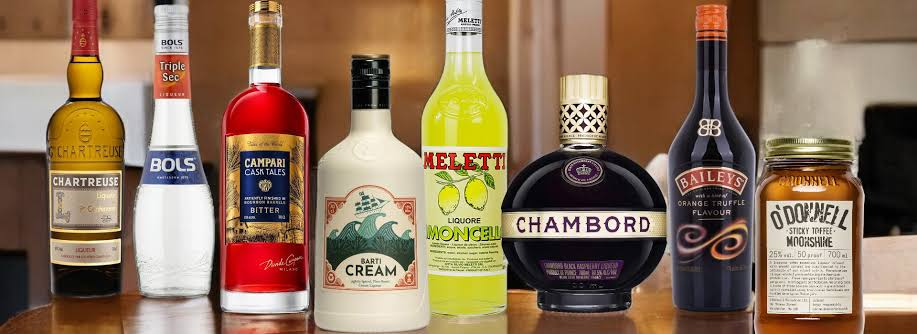
“Asian spirits” describes a broad market segment rather than a legal category. Korean soju, Chinese baijiu, Vietnamese and Thai spirits, Indian whisky, and Filipino coconut or sugarcane spirits differ in ingredients, production methods, alcohol strength, and added ingredients.
Japan’s Liquor Tax Act classifies spirits according to their characteristics and production methods. The country of origin and the product’s home-market name do not determine its Japanese classification.
Japan distinguishes between continuous-distilled and single-distilled shochu. Some foreign Asian spirits may share characteristics with these categories. However, the correct classification depends on the product’s ingredients, production process, and other relevant facts. Confirm the appropriate category against current National Tax Agency (NTA) guidance before shipping.
How Classification Affects Import Procedures
Your product classification must remain consistent across all import documents. The food import notification submitted to the Ministry of Health, Labour and Welfare (MHLW), the customs declaration, the HS code, the liquor tax assessment, and the Japanese label must accurately describe the same product.
If these records conflict, authorities may request clarification. Consequently, the shipment could remain in a bonded warehouse until the importer resolves the discrepancy.
Foreign brands generally work with a qualified Japanese importer to manage the necessary licensing and filings. The importer needs accurate information from the producer to complete these procedures. Provide the raw materials, distillation method, final ABV, and details of any added ingredients.
Practical Steps for Producers
Describe each stock-keeping unit (SKU) according to its actual characteristics. Include the base ingredient, distillation process, final alcohol strength, sweeteners, and flavorings.
Do not assume Japanese authorities will interpret terms such as “soju” or “baijiu” exactly as consumers do in the country of origin. Instead, confirm the legal classification before shipping. This early review helps prevent avoidable delays and unexpected costs.
Tax Classification for Asian Spirits in Japan
Understanding the Main Tax Variables
Japan calculates liquor tax according to the applicable product category and statutory rules. Alcohol strength can also affect the tax treatment of certain spirits. Importers must additionally consider customs duty and Japan’s 10% consumption tax.
The precise treatment of an Asian spirit depends on its classification and the current rules. Before using any rate in a financial model, confirm the applicable liquor tax, any strength-related adjustments, and the customs duty.
Alcohol strength varies considerably across Asian spirits. Diluted soju, for example, generally has a lower ABV than many traditional distilled spirits. Baijiu often reaches 50% ABV or more, placing it above the 37% threshold discussed in our guide to high-ABV spirits.
How Importers Calculate Tax
Customs and tax authorities assess the shipment using the relevant classification, ABV, volume, and declared value. Importers must calculate the applicable charges in the correct sequence. Japan’s consumption tax calculation also takes the relevant taxable amounts into account.
Our guide to Japan’s three import charges explains how customs duty, liquor tax, and consumption tax interact.
Country of origin also influences customs duty. Japan has trade agreements with several Asian economies, but preferential treatment does not apply automatically to every product. Importers must check the product classification, agreement-specific rules, and supporting origin documents. [VERIFY]
Practical Steps for Cost Planning
Organize your SKUs by confirmed classification and ABV before estimating landed costs. Do not rely on the retail price alone to predict the tax burden. A cheaper product does not necessarily attract lower taxes.
We avoid quoting firm import costs without reviewing the actual product details. Your landed cost depends on the product category, alcohol strength, country of origin, and other shipment-specific factors.
Japanese Labeling and Country-of-Origin Requirements
Understanding the Labeling Rules
Japanese alcohol labels must comply with the applicable requirements of the Food Labeling Act and the Liquor Tax Act. Importers must also address the required under-20 drinking warning, accurately disclose ingredients and additives where required, and state the product’s origin correctly.
The relevant labeling-method notification must also cover the product under the applicable procedures. Importers should confirm the required filing and labeling sequence with the responsible tax office before withdrawing goods from bond.
Our guide to the respective labeling duties under the two Acts explains these requirements in more detail.
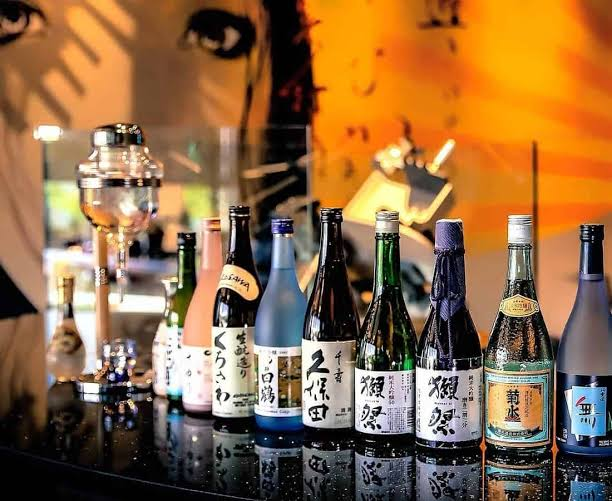
Country-of-origin wording deserves particular attention. Japanese shochu and awamori have established places in the country’s spirits culture. Some product names also receive geographical protection. A foreign spirit must not suggest Japanese origin through misleading wording, imagery, or use of the term “shochu.”
Confirm which terms your product may legally use and what conditions apply.
Common Labeling Problems
Foreign Asian spirits can encounter several preventable labeling issues:
- Calling a foreign product “shochu” without confirming that the term is appropriate.
- Using imagery, packaging, or typography that falsely suggests Japanese origin.
- Failing to disclose sweeteners or flavorings in products such as flavored soju.
- Presenting ABV and bottle volume in formats that do not meet Japanese requirements.
- Translating cultural references literally, creating confusing descriptions or unsupported claims.
- Using health-related language that may violate restrictions on alcohol advertising or product claims.
Our guide to health and efficacy claims explains why alcohol marketing requires careful wording.
How Localization Helps
Treat translation, label design, compliance review, and the required notification as one coordinated process. State the product’s origin clearly, explain traditional terms where necessary, and match every marketing claim to verifiable product information.
Our guides to protected terms and translated tasting notes offer further advice. A thorough review before printing helps your brand communicate its identity without creating avoidable compliance problems.
Competing with Domestic Shochu

Understanding the Competitive Landscape
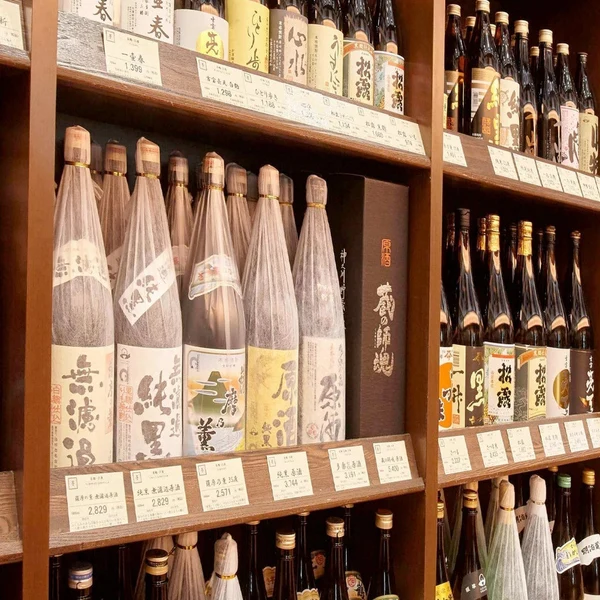
Shochu is an established part of Japan’s spirits market. It has regional traditions, varied ingredients, and knowledgeable consumers. A foreign spirit that presents itself as a direct substitute must therefore compete with a familiar domestic category.
Instead, foreign Asian spirits can stand out by highlighting their own traditions. Focus on distinctive ingredients, regional origins, production methods, or serving customs. These details give customers a reason to explore a product beyond its alcohol content.
Soju already enjoys some consumer familiarity in Japan. Lesser-known Asian spirits may need more explanation. Nevertheless, every brand needs a clear reason for buyers to choose it.
How Market Positioning Affects a Launch
Regulatory compliance helps a product enter the market, but it does not guarantee sales. A shipment may clear customs successfully and still struggle if the product lacks a distinctive identity.
Conversely, a compelling product story can help support its market position. However, that story must remain accurate and consistent with the label.
Naming and presentation also matter. A foreign spirit that borrows shochu terminology to appear familiar may raise compliance concerns. It may also lose credibility with knowledgeable buyers.
Practical Steps for Differentiation
Explain what your spirit offers that domestic shochu does not. Highlight its ingredients, place of origin, production method, and traditional occasions for drinking it.
A foreign spirit can attract Japanese buyers without imitating a domestic product. The goal is to communicate a clear identity that customers can understand and remember.
A review of your labels and SKUs can help determine whether your product story supports your intended market position before you ship.
Distribution Channel Strategy for Asian Spirits
What Determines the Best Sales Channel?
Channel selection depends on alcohol strength, price, brand recognition, and customer expectations. Japan’s distribution network includes importers, wholesalers, retailers, hospitality businesses, and e-commerce platforms. Each channel serves different customer needs.
Restaurants and bars specializing in Korean, Chinese, Thai, or Vietnamese cuisine can introduce spirits to customers who already recognize their traditions. Specialist spirits retailers may suit premium, craft, and rare products. Meanwhile, e-commerce platforms can reach curious consumers and diaspora communities. Convenience stores and general retailers may suit lighter or more familiar products, depending on buyer interest and commercial arrangements.
Plan Costs and Pricing Carefully
We do not assign a standard price to every Asian spirit because landed costs, margins, and channel requirements vary. The confirmed product classification, ABV, country of origin, and positioning all affect the commercial calculation.
A premium or craft spirit may have more room to absorb import costs than a value-priced product. By contrast, a product that relies on a low price may face greater pressure when import costs rise.
Our guide to pricing alcohol for the Japanese market explains how to work backward from landed costs and the target selling price.
Review Each SKU Before Choosing a Channel
A label-and-SKU review establishes the information needed for a realistic channel plan. It confirms the product classification, alcohol strength, estimated landed cost, and story communicated by the label.
Without these details, channel selection becomes guesswork. With them, importers can assess which sales routes suit each SKU and what price the market may support.
JapanPint distributes through its own channels, including CraftBeer.co.jp, OmoriMart.com, and Jasumo.com, alongside Amazon Japan, Rakuten, and Yahoo Shopping. This network offers potential routes to different customer segments. The most appropriate channel still depends on each product’s characteristics and target market.
Asian Spirits Import Checklist for Japan
Essential Pre-Shipment Checks
Before shipping Asian spirits to Japan, confirm the following:
- Product classification: Verify each SKU using its raw materials, distillation method, and added ingredients.
- Alcohol strength: Confirm the bottled ABV and applicable tax treatment, including any relevant threshold.
- Customs classification: Establish the correct HS code and applicable duty based on the country of origin.
- Ingredients and additives: Prepare a complete list covering sweeteners, flavorings, and other relevant additions.
- Product terminology: Confirm whether the label may use terms such as “shochu.”
- Japanese labeling: Check the applicable Food Labeling Act and Liquor Tax Act requirements, including the under-20 warning.
- Sales strategy: Develop a suitable positioning and distribution plan for every SKU.
Why These Checks Matter
Each check addresses a question that regulators, tax officials, or buyers may raise. Classification and ABV help determine the applicable tax treatment. Ingredient information supports the required food import procedures. Product terminology and origin statements must accurately reflect the product.
The Japanese label must also meet the applicable requirements before the importer withdraws the goods from bond. Finally, a clear positioning strategy helps the product reach the right customers.
Missing information can become costly when a shipment arrives. The importer may face delays, additional reviews, or label reprinting.
Prepare Your Documents Before Shipping
Gather the essential product information before drafting Japanese label text. Prepare a specification sheet for every SKU, a complete ingredient and additive list, a short production description, and the proposed artwork.
Keep all details consistent across the documents. Then, share the complete set with your importer before committing to Japan-specific production. If you change the recipe, ABV, or packaging later, inform your importer so they can review the impact.
JapanPint can review your product range and help identify the information needed for entry into Japan. We do not promise fixed prices or timelines before reviewing your labels, SKU count, alcohol strength, and country of origin.
To discuss your products, use the JapanPint contact form. Alternatively, email su*****@*******nt.com.
Early preparation helps your team understand compliance requirements, import costs, and market positioning before the shipment leaves its country of origin.