Cold-Chain and Shipping for Exporting Sensitive Japanese Alcohol
 By
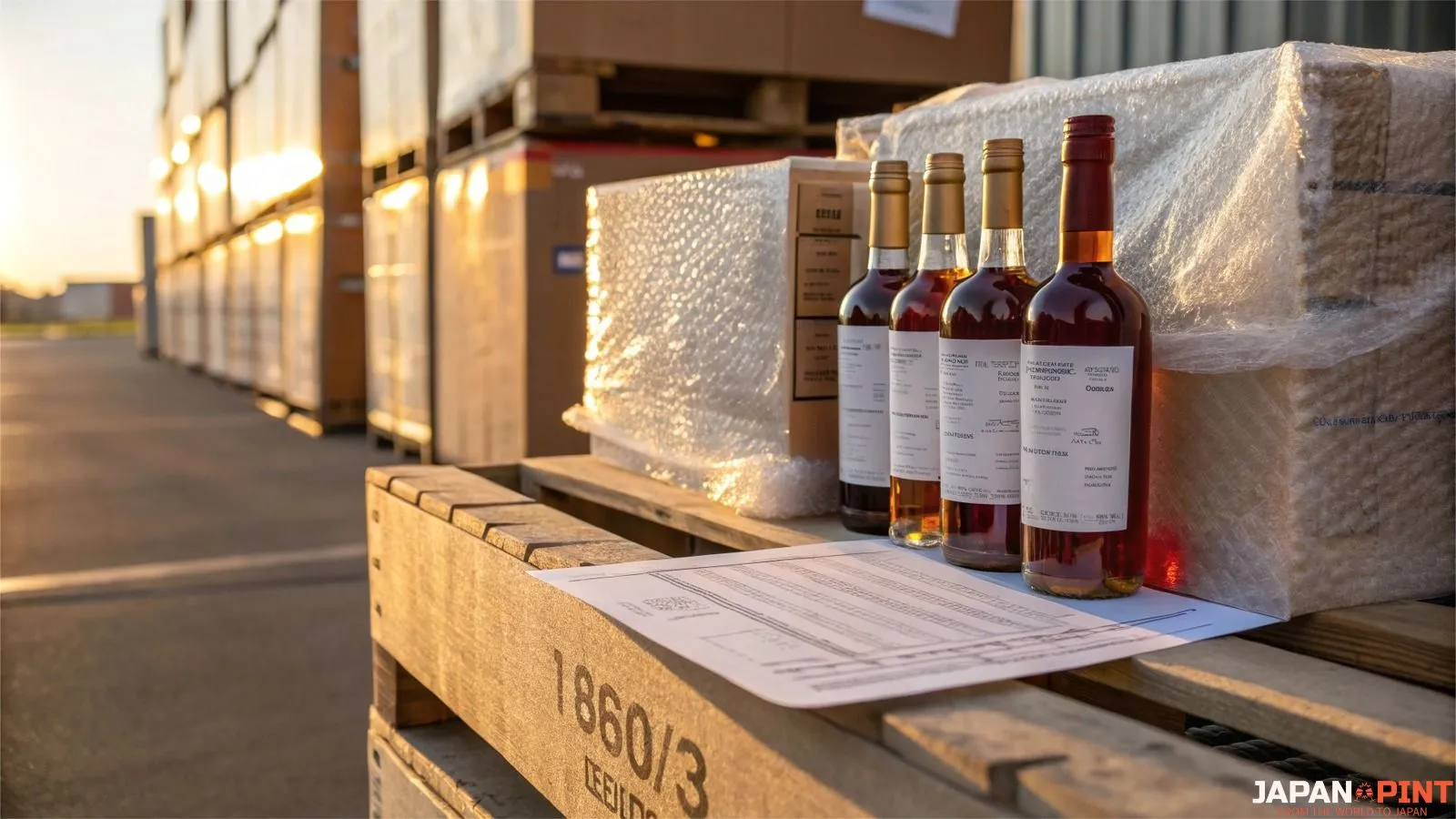
A pallet of premium sake can leave a brewery in perfect condition and arrive at an importer’s warehouse tired, flat and worth far less than its invoice value.
Producers planning cold chain sake export must decide which products need temperature protection. They also need to choose suitable packaging and calculate the cost of preserving quality.
This guide explains those decisions from an operator’s perspective. It helps Japanese alcohol producers plan overseas shipments without damaging their products or their brand.
Why Some Products Need a Cold Chain
The direct answer
A cold chain keeps a product within a controlled temperature range. It protects the product from the brewery through transport and storage to the point of sale.
Most spirits, including whisky, gin and shochu, tolerate ordinary shipping conditions. Sake varies more widely. Delicate styles, some lower-alcohol products and certain flavoured drinks can deteriorate quickly.
Heat, light and long delays can all affect quality. Therefore, cold-chain shipping should depend on the product, not serve as a standard add-on.
[VERIFY: Confirm recommended storage and transport temperatures for each product style. Use the producer’s quality specifications and a qualified technical source.]
What determines the need for temperature protection?
Several factors influence the decision:
- Product style and alcohol content
- Whether the producer pasteurized the sake
- Journey length and route
- Shipping season and expected temperatures
- Destination storage conditions
For example, a robust pasteurized sake travelling a short route in winter faces a different risk from an unpasteurized, fragrant ginjo crossing tropical waters in summer.
Many breweries now explore overseas markets as domestic demand changes. However, first-time exporters can underestimate temperature damage. A poor first shipment may harm both the product and the brewery’s reputation.
A practical example
Imagine a small brewery sending a mixed pallet to an overseas importer in July. The shipment contains one pasteurized junmai and one unpasteurized ginjo.
Both bottles travel in a standard container. The junmai arrives in acceptable condition. However, the ginjo loses its fresh aroma and develops unwanted flavours.
The importer can no longer sell it as the premium product they expected. The brewery must replace the stock, offer a discount or risk losing the account.
A refrigerated container or a cooler shipping season might have cost less than those outcomes.
Sake and Freshness
What exporters need to understand
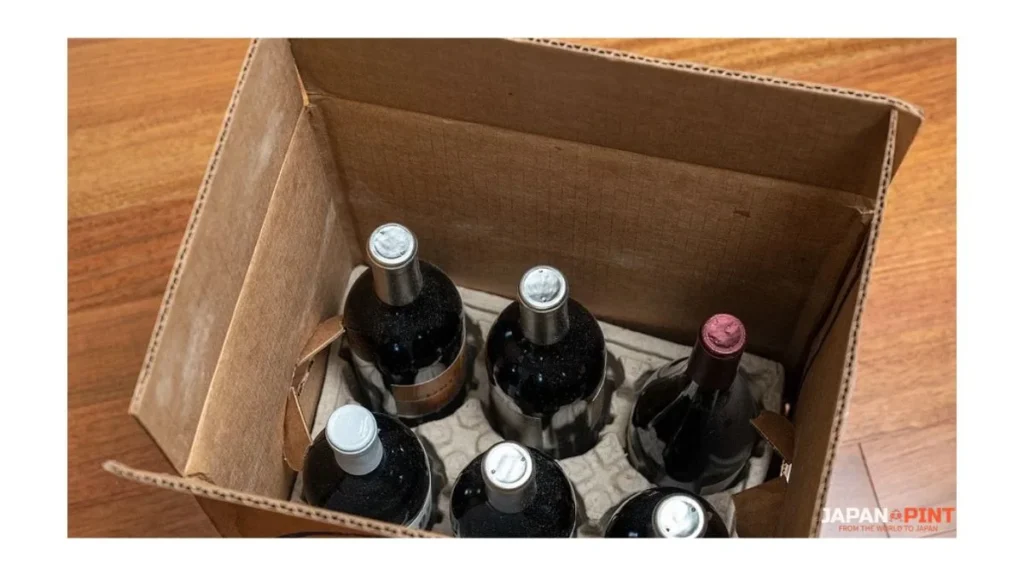
Sake does not reliably improve with time in a warm warehouse. Unpasteurized sake, known as nama, requires particular care because it retains active enzymes and other components.
Delicate daiginjo and fragrant ginjo styles can also lose the qualities that justify their price when heat affects them.
Light presents another risk. It can damage sake, especially when producers use clear or lightly tinted glass.
Some sake styles can age under controlled conditions. However, producers design that process deliberately. Do not assume that every sake benefits from ageing.
Freshness has a limited window. The journey uses part of that window, from bottling through storage, export clearance, transit and final delivery.
[VERIFY: Confirm realistic shelf-life guidance for each sake style under the intended storage conditions. Ask the brewery’s quality team for guidance.]
What happens in the destination market?
Buyers rarely see the journey. They judge the product they receive.
A bottle that tastes flat or develops off flavours can damage customer trust. It can also weaken the importer’s confidence in the brewery.
Furthermore, many importers store stock for weeks or months after arrival. Conditions in the destination warehouse matter just as much as conditions at sea.
Sensitive products often create the first impression of an entire range. Importers may judge a brewery by its first shipment, so a poor arrival can be difficult to recover from.
The practical takeaway
Classify every SKU as robust, sensitive or highly sensitive before quoting a buyer. Include that classification in the product specification.
Explain the storage requirements to the importer. Then ask whether their warehouse and customers’ venues can meet those requirements.
A premium brand promise only works when the bottle delivers the quality the buyer expects.
Packaging for Ocean and Air Freight
What exporters need to understand
Packaging must address three main risks: breakage, temperature and delays.
Glass bottles need secure cartons and careful palletising. Temperature protection can range from basic precautions to insulated packaging or refrigerated containers.
Keep products away from direct sunlight and hot cargo areas whenever possible. Also, label cartons and pallets clearly. Include orientation marks and any necessary handling or temperature instructions.
Ocean and air freight offer different advantages.
Sea freight costs less per bottle, but it takes longer. Container temperatures can rise significantly, especially on tropical routes or when containers sit in the sun.
Air freight moves products faster and reduces the exposure period. However, it costs much more per bottle and involves its own cargo-handling and packaging requirements.
[VERIFY: Confirm current carrier and airline rules for alcohol shipments. Check packaging, quantity and documentation requirements for each route and transport method.]
What happens after arrival?
The journey does not end at the port. Containers may wait for customs clearance, inspection or collection.
A delay at a warm terminal can undo careful packaging. Therefore, exporters should plan for the entire route, including the time between arrival and warehouse delivery.
Importers also care about practical details. Pallets should meet their handling requirements. Cartons should be easy to move. Product labels and carton markings must match the invoice and import documents.
Destination rules also apply. A licensed importer usually handles the relevant alcohol import responsibilities. The parties must confirm product classification, labelling and excise requirements.
Japanese bottle sizes, including 720 ml and 1.8 L, may not suit every market’s expected formats.
[VERIFY: Check current import, labelling, standards-of-fill and excise requirements for each destination.]
The practical takeaway
Discuss packaging with your freight forwarder and importer before finalising the order.
Test the packaging with a small shipment first. Photograph the pallets at handover and keep carton markings consistent.
Also, make sure the product information matches across every shipping document.
Managing Temperature in Transit
What exporters need to understand
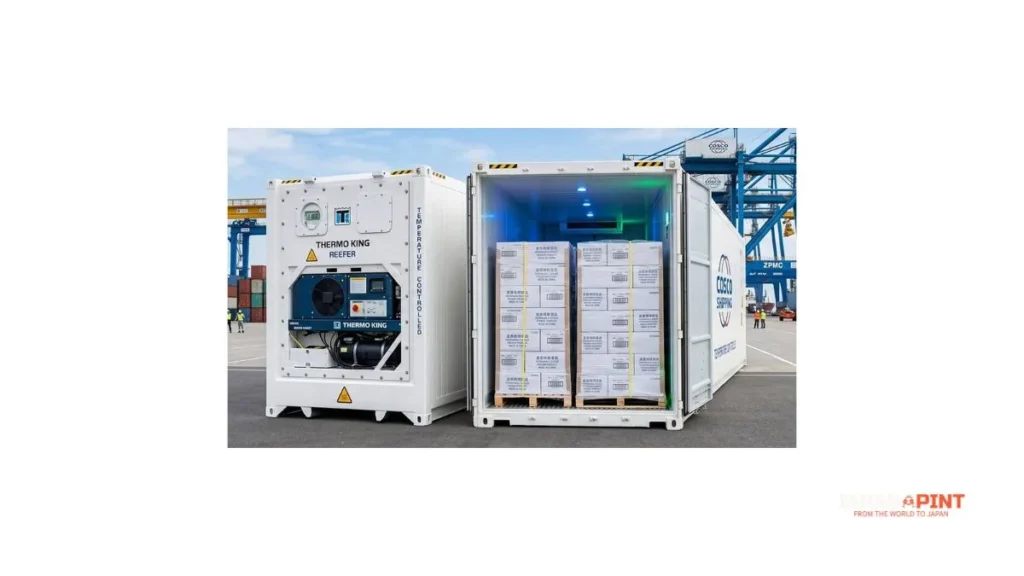
Temperature management requires three things: a suitable method, reliable monitoring and clear responsibility.
Exporters can choose from several options:
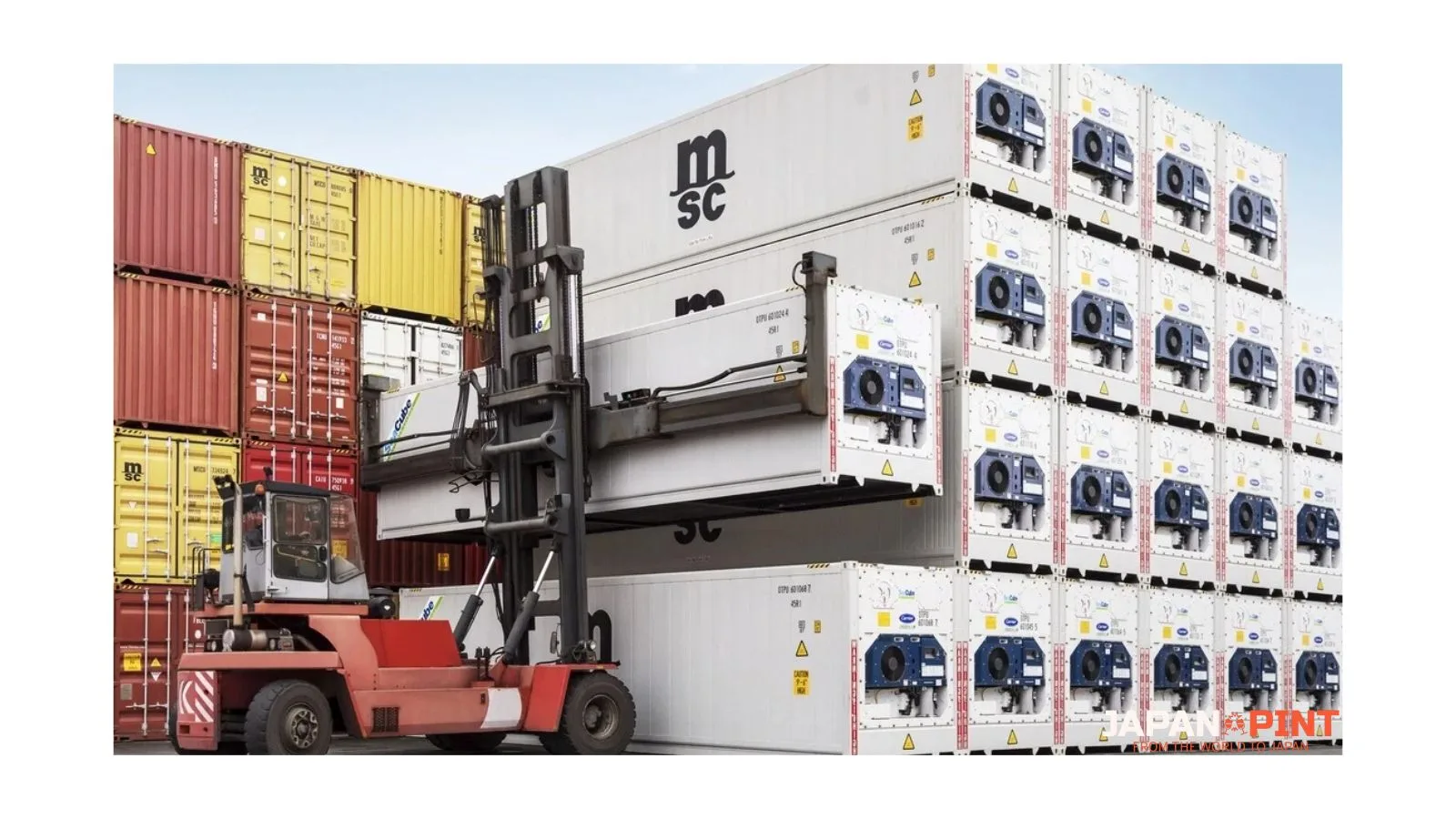
- Refrigerated containers
- Insulated packaging with cooling elements
- Shipping during cooler seasons
- Shorter routes
- Carriers with experience in temperature-sensitive cargo
However, no method works well without clear accountability. Someone must manage the shipment and record what happens during transit.
Temperature loggers can help. Place them inside the shipment to record conditions throughout the journey.
These records can provide evidence if the product arrives damaged. They can also reveal which stage caused the problem.
[VERIFY: Review suitable temperature-logging options. Confirm how the exporter can share records with the importer and insurer.]
Assigning responsibility
Write temperature requirements into the shipping agreement.
Standard shipping terms explain who arranges and pays for transport. They also identify where risk transfers between parties. However, they do not automatically specify the temperature a product must maintain.
If the sake requires a refrigerated container, state that requirement clearly. Identify the party responsible for booking and paying for it.
Check the insurance policy as well. Standard cover may exclude temperature-related losses unless the policy includes specific protection.
[VERIFY: Confirm whether the insurance covers temperature damage. Check the exact wording of any shipping term used.]
The cold chain continues after the port
A shipment can remain chilled for three weeks and still fail if someone leaves it on a loading bay for a day.
Destination-side handling requires the same attention as ocean transport. Include bonded storage, customs clearance and final delivery in the temperature plan.
Japanese export procedures also apply to every shipment. These include the relevant liquor-tax treatment and the requirements for the licensed parties handling the export.
[VERIFY: Confirm current export exemption and licensing requirements with the National Tax Agency (NTA).]
The practical takeaway
Prepare a one-page handling instruction for every sensitive SKU.
Include:
- Acceptable temperature range
- Maximum time outside that range
- Handling instructions
- Responsibility at each stage
Attach the instructions to the contract. Use loggers on early shipments and review the results with your importer.
Cost Versus Quality: Choosing the Right Shipping Method
Standard shipping or temperature-controlled shipping?
Standard shipping costs less and requires less coordination. It can work well for robust products and favourable seasons.
Temperature-controlled shipping costs more. It also requires additional planning and monitoring. However, it can protect sensitive, high-value products.
Between these options, exporters can consider seasonal shipping, insulated packaging or air freight for small, valuable consignments.
Cost, speed and control
Temperature control increases the landed cost of every bottle. Exporters must recover that cost through pricing and product positioning.
For this reason, refrigerated shipping often suits premium products better than everyday products.
Air freight offers speed, but it can multiply the freight cost per bottle. A refrigerated container provides greater temperature control than ordinary packaging. However, it also requires careful booking and coordination at transfer points.
We do not quote fixed costs or timelines in this guide. They depend on the product, route, season and shipment volume.
Instead, compare confirmed quotes for each option. Review the labels, SKU count and destination requirements before making a decision.
How to choose the right option
Calculate the value at risk in each shipment. Then compare it with the extra cost of protection.
For example, if a pallet of premium sake carries significant value and temperature protection costs only a small fraction of that value, the investment may make sense.
However, if protection costs more than the margin on an everyday product, consider leaving that product out of the export range.
Overseas buyers pay for quality and a compelling product story. Protect the products that support your premium positioning. Remove products that cannot justify the extra logistics cost.
Choosing Logistics Partners
How the export channel works
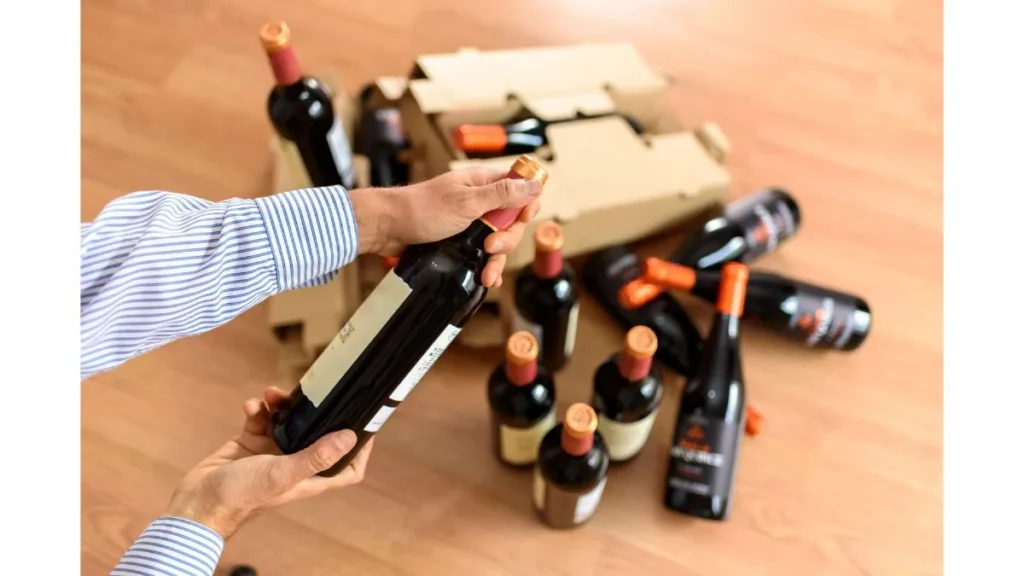
A typical alcohol export involves a freight forwarder, a carrier and possibly a customs broker.
On the destination side, a licensed importer usually handles the relevant alcohol import responsibilities.
Many countries require an importer to hold the appropriate licence. Some markets also have complex distribution structures. For example, the United States has state-specific rules and a three-tier distribution system.
[VERIFY: Confirm the current licensing and market structure for each destination. Check excise and bonded-warehouse arrangements in the EU and the rules in individual US states.]
A freight forwarder provides logistics services. It does not automatically act as a licensed importer or accept the importer’s regulatory responsibilities.
Confirm each party’s role early. Do not assume that a forwarder will manage licensing, notifications or label compliance.
Matching the partner to your product
Look for a forwarder with alcohol-shipping experience. If your product needs temperature protection, choose a partner with experience in refrigerated cargo.
Ask practical questions:
- How many alcohol shipments do you handle?
- How do you manage refrigerated containers?
- What temperature records can you provide?
- Who takes responsibility if the shipment suffers damage?
- How do you handle delays at transfer points?
A smaller specialist may give more attention to a premium shipment than a large generalist.
Match the partner to the product. A robust spirit moving regularly in full containers has different needs from a small release of unpasteurized sake.
Choose based on category experience and service quality, not only the lowest rate.
Where JapanPint’s operator experience applies
JapanPint’s owned channels include CraftBeer.co.jp, OmoriMart.com and Jasumo.com. These channels, along with Amazon Japan, Rakuten and Yahoo Shopping, operate within Japan.
They do not form an overseas distribution network. We do not claim to maintain a network of overseas importers or freight partners.
Instead, we bring operator knowledge from the import side. We understand what licensed importers need from producers, how they review labels and notifications, and where documentation often falls short.
We know what a well-prepared producer looks like from the importer’s perspective.
That means consistent SKU information, accurate alcohol content and ingredient data, and labels ready for review.
A shipment can arrive perfectly chilled and still fail if the destination rejects its label. Therefore, temperature planning and label compliance belong in the same export discussion.
Tell us about your range and target markets through our contact form. We can review your labels and SKUs against the information your target importers will expect.
You can also contact us at su*****@*******nt.com.