Exporting Japanese Alcohol to China: Opportunities and Cautions
 By
China is the market Japanese producers most often ask about and the one most likely to surprise them. The scale is attractive, but policy, labeling and partner risk are all higher than in most destinations. This guide explains how to export alcohol to China as a Japanese producer, with the opportunity and the cautions side by side.
China’s scale and volatility
What an exporter needs to understand
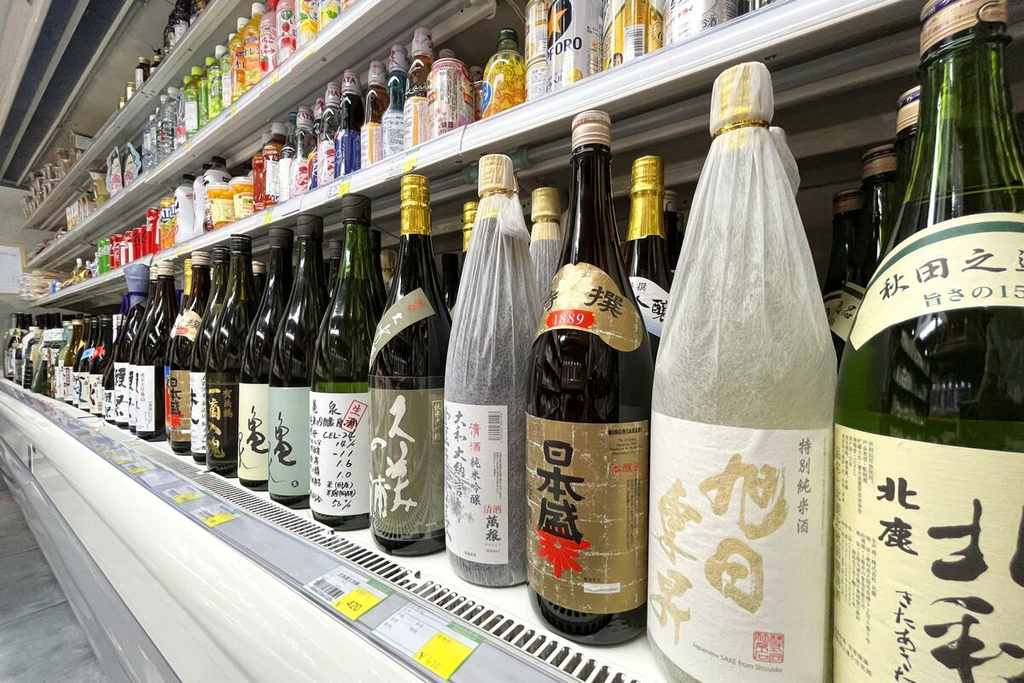
Japan’s drinking population is shrinking and aging, and domestic volume is flat to declining, so looking at a market of China’s size is a rational instinct. The country has a very large base of affluent urban consumers, a well-developed e-commerce infrastructure, and an established appetite for imported premium drinks. Japanese whisky, sake and fruit liqueurs have all found buyers there.
The scale comes with volatility. Demand can shift quickly with consumer sentiment, and the market is dominated by domestic baijiu, which sets the price expectations against which imported spirits are judged. Political relations between the two countries can also affect how Japanese products are received and how smoothly they clear the border.
How it plays out in the destination market
A Japanese producer entering China is not introducing alcohol to a new audience. It is competing for the attention of a consumer who already has strong reference points. Sake is compared with rice wine and baijiu, and Japanese whisky with Scotch and cognac. Each comparison has a price anchor attached.
Sales also tend to cluster in a few channels: high-end restaurants, specialist importers, cross-border e-commerce platforms and gifting. Each rewards a different kind of product. A premium junmai daiginjo can do well as a gift, while an everyday sake may struggle to justify its landed price.
The practical takeaway
Treat China as one deliberate market, not as the whole export plan. As in Japan itself, premium quality and a clear story carry far more weight than a lower price, and a Japanese producer competing on price against domestic and established imported brands is unlikely to win. Size the first commitment so that a policy shift would hurt, but not endanger the business.
Import and labeling rules
The items that matter most
Chinese import requirements can be grouped into four areas: customs and inspection filings, the exporter and importer registrations that go with them, the Chinese-language label, and the taxes assessed on entry. Each is administered by a different part of the system, and each can stall a shipment if it is missed.
In general terms, expect the following to matter:
- Registration and filing. The Chinese customs authority maintains registration or filing requirements for overseas food producers and exporters, and the Chinese importer must also be filed. [VERIFY: whether and how the current GACC registration and filing rules apply to your specific category of alcohol.]
- A Chinese-language label. Imported products must carry Chinese labeling that includes elements such as product name, ingredients, net content, alcohol content, producer details, country of origin and the Chinese importer or agent. [VERIFY: current mandatory label content and any category-specific standards for sake, spirits and liqueurs.]
- Duties and taxes. Imports are generally subject to customs duty, value-added tax and, for alcohol, a consumption tax that differs by category. [VERIFY: current rates for each, and whether preferential duty treatment under the RCEP agreement applies to your product and origin documentation.]
- Shipment documentation. Certificates and supporting records for each consignment, which the importer must be able to produce on arrival. [VERIFY: current certificate and inspection requirements.]
Why each one is required
The registration and filing system exists so that Chinese authorities can trace imported food and drink to a named producer, a named exporter and a named domestic importer. The Chinese-language label exists because the consumer must be able to read what is in the product. Taxes are assessed because alcohol is a taxed category in nearly every country.
The point worth absorbing is that China places accountability on the Chinese importer, in the same way Japan places it on the importer of record. A Japanese producer cannot simply ship goods to an address in China. It needs a local party who is properly filed and who will stand behind the product.
How to prepare them correctly
Prepare your product information before approaching any importer: a full ingredient list, accurate ABV, net contents, production details and clear photographs of the current label. Share it in a consistent, organized form. An importer who receives clean, complete information can give you a straight answer about what the label needs. One who receives fragments will either guess or pass.
Do not print a final Chinese label before your importer has confirmed the content. A label error is cheap to fix on screen and expensive to fix on a pallet. Whether your current label and documentation are in shape for a Chinese importer is exactly the kind of thing worth checking before you commit to a print run, and it is the same logic we apply from the import side in Japan, where a label review before filing prevents expensive surprises.
Tariff and policy risk
What goes wrong and why
Two kinds of risk matter here, and producers often confuse them. The first is routine: duty and tax assumptions that were wrong, or preferential treatment that was claimed without the right documentation. The second is political: a change in policy toward Japanese goods that can slow, restrict or in some cases suspend imports of particular categories.
Political risk is difficult to predict and impossible for a producer to control. Relations between the two governments have affected trade in Japanese products before, and the situation can change faster than a shipping schedule. [VERIFY: current status of any restrictions, inspections or advisories affecting Japanese food and beverage imports into China, since this changes and should be checked immediately before any commitment.]
The real-world cost of getting it wrong
A producer who builds a business plan around a single Chinese importer and a single policy assumption can face stranded inventory, delayed payment, or a sudden change in the landed cost of its product. Alcohol is not perishable in the way fresh produce is, which helps, but a bottle that cannot be sold still ties up working capital. Some categories, such as unpasteurized or lower-ABV sake, are more sensitive to storage and delay than aged spirits.
Duty errors cost money in a different way. If your costing assumed a preferential rate that your documentation does not support, the importer’s margin or yours absorbs the difference, and that tends to damage the relationship.
How to prevent it before you ship
Several habits reduce this exposure. Start with modest, staged shipments rather than a single large container. Confirm the duty treatment and the documentation it requires in writing before you price, and verify the current policy position immediately before each shipment, not only at the start of the project. Keep a second market in view so that China is a part of your plan rather than all of it.
Payment terms matter as well. Be cautious about extending credit to a new importer, and agree clearly in advance who bears the cost of goods that are held or refused at the border. We do not quote firm costs or timelines for any of this, because they depend on your product, your labels and your destination route.
Premium-segment dynamics

What an exporter needs to understand
The most promising ground for a Japanese producer is the premium segment. Affluent Chinese consumers buy imported alcohol for gifting, for business dining and for personal enjoyment, and provenance carries real weight in each case. Japanese craft and heritage are credible stories there, and Japanese whisky and premium sake already have a following among informed buyers.
The segment is also demanding. Buyers compare quality, authenticity and presentation, and a product that looks ordinary or arrives through an unclear channel loses its premium position quickly.
How it plays out in the destination market
Authenticity is a live issue. Well-known Japanese brands, whisky in particular, have attracted counterfeits and misleading imitations in several markets. A premium brand therefore needs a clear and protected identity before it arrives. In China, trademark rights are generally granted to whoever files first, and the Chinese-character form of a brand name matters as much as the Latin one. [VERIFY: current trademark registration process and timing in China, ideally through a qualified local IP adviser.]
Packaging and storytelling also work differently there. Gift-oriented packaging, clear provenance, and a short, memorable explanation of what makes the product special tend to outperform a technical description of production.
The practical takeaway
Protect the brand first, then ship. Register your trademark, including a considered Chinese name, before you begin conversations with importers. Choose a hero product with a story that survives translation, and price it as a premium item. Offering a discount to win volume undermines the very positioning that makes the segment worth entering.
Finding partners carefully
How this channel actually works abroad
In China, the practical route runs through a licensed importer, and from there to distributors, restaurant groups, retailers or e-commerce platforms. A second route, cross-border e-commerce, lets products be sold to consumers through platforms operating under different rules from general trade. [VERIFY: current rules governing cross-border e-commerce for alcohol, including any product limits and labeling treatment.]
The two routes behave differently. General trade gives you a conventional importer relationship and a Chinese label on every bottle. Cross-border channels can be faster to start but come with their own limits and platform dependencies. Many producers eventually use both.
Fit for your product and price tier
A premium sake, whisky or liqueur with a strong story generally suits a specialist importer that already serves high-end restaurants and gifting channels. A large generalist distributor may have reach but will list your product among hundreds of others. An everyday product has a harder path in either case.
Whichever route you choose, put the questions we recommend foreign brands ask Japanese importers to your Chinese partner. What licenses and filings do you hold, and do they cover the channels I want? How many Japanese products do you carry? How do you train the trade? Who is responsible for the label in the Chinese market? A partner who answers plainly is behaving like an operator. A partner who is vague about filings and responsibility is a warning sign.
Where JapanPint’s operator view applies
JapanPint’s owned channels (CraftBeer.co.jp, OmoriMart.com and Jasumo.com), along with Amazon Japan, Rakuten and Yahoo Shopping, operate inside Japan, so they are not a Chinese distribution network, and we do not claim otherwise. We also do not claim a network of importers in China. What we bring to outbound projects is the operator knowledge we use on the import side, applied in reverse: what a licensed importer needs to see from a producer, how labels and notifications are checked, and where documentation tends to fall short.
In practice, that means helping a Japanese producer arrive at its first conversation with a Chinese importer with consistent SKU information, accurate ABV and ingredient data, and labels that are ready for review.
A China-export roadmap
What an exporter needs to understand
Most careful programs follow a similar order, and the sequence matters more than the speed.
- Protect the brand: file trademarks, including the Chinese-character name, before sharing product details widely.
- Choose one hero product and a clear premium position, rather than sending the whole range.
- Confirm the Japanese-side export steps, including the liquor tax treatment of exported alcohol and who is licensed to handle the export. [VERIFY: current export exemption and licensing requirements administered by the NTA.]
- Confirm the Chinese filing, label and duty requirements with a prospective importer, in writing.
- Select an importer on category depth, financial reliability and attention to your product.
- Ship a modest first consignment through a compliant channel, remembering that alcohol samples are still alcohol shipments. [VERIFY: sample rules for China.]
- Review results and the policy position before committing to a second, larger order.
How it plays out in the destination market
Timelines and costs vary widely with the product, the route, the classification outcome and the partner. Duties and taxes are tied to category and value, label changes carry design and printing costs, and freight, storage and payment terms add their own variables. We don’t quote firm figures for any of these, because a realistic number depends on reviewing your labels and SKU count.
What separates a smooth first shipment from a stalled one is preparation: the brand protected early, requirements confirmed in writing, a label made for the market, and an importer who understands what they are buying.
The practical takeaway
Treat China as a high-reward market that deserves cautious, staged entry. If you plan to sell Japanese alcohol in China, lead with a clear premium story and a protected brand, keep your exposure proportionate, and verify the current rules before each step.
China can reward a well-prepared Japanese producer, but it punishes assumptions. The details that decide your outcome, from filings to label wording to payment terms, are specific to your range and your route.
Tell us about your range and the markets you’re considering through our contact form, and we’ll review your labels and SKUs against what your target importers will expect to see. If you prefer email, you can also reach us at su*****@*******nt.com.