What Foreign Alcohol Brands Get Wrong About Entering Japan
 By
By 
Most mistakes brands make when entering Japan’s alcohol market are not unusual. They usually come from applying US or EU assumptions to a system with different rules. This guide covers six common errors, why they happen, and how brands can avoid them.
Assuming Japan Works Like the US or EU
What a Foreign Brand Needs to Understand
Brand owners who have exported successfully to Western markets often expect Japan to follow the same process. They find a distributor, sign an agreement, and ship the product.
Japan works differently from the start.
A foreign company cannot hold a National Tax Agency liquor license without a Japanese entity. Therefore, the process must begin with a licensed importer of record rather than a standard distribution agreement.
This difference affects every stage that follows. The license holder handles compliance filings, tax procedures, and label requirements.
How It Plays Out in the Import Process
Brands that expect a US-style distributor relationship can discover problems during negotiations.
For example, the potential partner may not have the required license. As a result, the partner cannot take title to the goods or file the required notifications.
Finding this out late can delay a shipment for months.
The food import notification under the Food Sanitation Act must go through the appropriate party. The same applies to the labeling-method notification and liquor tax and duty payments.
Therefore, identifying the correct licensed partner should come first.
The Practical Takeaway
Start your Japan market entry process by finding a licensed importer of record.
Do not simply search for a company that looks like a US distributor. The license-holding relationship supports the entire import process. Choosing the wrong structure at the start can create expensive delays later.
Underestimating Label Localization
What the Regulation Requires
Alcohol products sold in Japan must meet Japanese labeling requirements. These requirements include the Food Labeling Act and the Liquor Tax Act.
Labels must also include the required warning against sale to people under 20.
The importer files the labeling-method notification with the tax office. The importer must also ensure that the Japanese label meets the relevant requirements before the goods leave bond.
The Most Common Compliance Gaps
Many brands treat localization as a simple translation task.
That approach creates several common problems.
Marketing language on the original label may not have a suitable Japanese equivalent. The original artwork may also lack enough space for mandatory Japanese information.
In other cases, brands remove back-label information instead of translating it.
Any of these issues can delay a shipment at bond if the team discovers them too late.
How to Handle Localization
Treat the Japanese label as a separate regulatory document.
The process should cover translation, artwork, layout, and the labeling-method notification together. Complete this work before the shipment reaches Japan.
This approach gives the importer time to resolve compliance issues before the goods arrive.
Treating Liquor Tax as an Afterthought
What a Foreign Brand Needs to Understand
Japan applies liquor tax under the Liquor Tax Act. Customs duty and the 10% consumption tax also affect the final import cost.
Liquor tax varies by product category. Spirits can fall into higher tax bands, with additional considerations for products above certain ABV thresholds.
Wine has also moved toward a unified rate with sake. Beer, happoshu, and third-category beverages are also moving toward a unified rate from October 2026.
These changes make rough tax estimates risky.
A brand that prices its product using a general tax assumption may discover that the actual margin differs significantly from its original calculation.
How It Plays Out in the Import Process
The issue becomes clear during customs assessment.
Customs calculates the relevant duty, liquor tax, and consumption tax before the goods clear bond.
If the brand treats tax as a small pricing detail, the final calculation can create an unwelcome surprise. By then, the shipment may already be in transit.
The Practical Takeaway
Calculate the expected liquor tax for your specific product before setting a Japan retail price.
Review the product category, ABV, SKU, and applicable tax treatment. Do not rely on a general tax rate from an unrelated product.
A detailed SKU and label review can help confirm the correct calculation before shipment.
Quoting Consumers Before Securing Distribution Channels
How this channel actually works in Japan
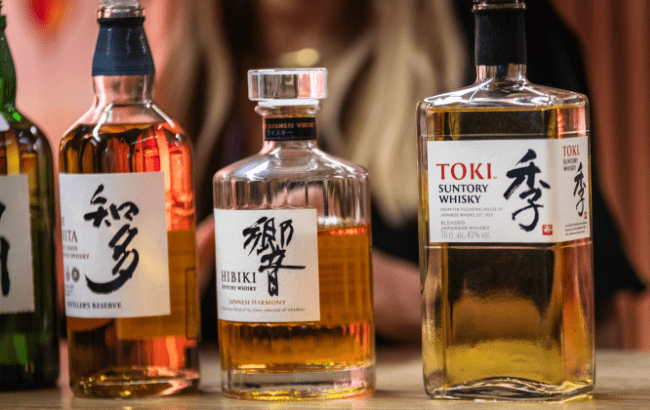
Japan’s distribution runs from importer to wholesaler to retail, on-trade, and e-commerce, and wholesalers remain influential gatekeepers even as e-commerce grows. Brands sometimes announce pricing or availability to consumers before actually securing placement through this chain, assuming channel access will follow demand.
Fit for a foreign brand’s product and price tier
That sequencing mistake is riskiest for premium and mid-tier brands specifically, because the channels that suit those price points — specialty retail, curated e-commerce, selective on-trade — take longer to secure than mass retail does, and a public pricing announcement made before those relationships exist can undercut the brand’s own credibility with the buyers it’s trying to reach.
How JapanPint’s owned channels apply
JapanPint distributes through its own channels — CraftBeer.co.jp, OmoriMart.com, and Jasumo.com — alongside Amazon Japan, Rakuten, and Yahoo Shopping. Working with a partner who already owns distribution means channel access and consumer-facing pricing can be sequenced correctly from the start, instead of a brand getting ahead of itself.
Ignoring the under-20 warning rules
The items that matter most
The mandatory warning against sale or consumption by those under 20 is one of the more mechanically simple requirements in Japanese alcohol labeling, and it’s also one brands sometimes miss or place incorrectly, assuming a general age-restriction disclaimer already on their home-market label is equivalent.
Why each one is required
This warning is required under Japanese labeling rules specific to alcohol, independent of whatever age-related language already appears on a brand’s US or EU label. A label reviewed for Food Labeling Act and Liquor Tax Act compliance in every other respect can still be rejected if this specific warning is missing or improperly formatted.
How to prepare them correctly
The reliable way to handle this is to treat it as a checklist item in the labeling-method notification process itself, confirmed as part of the same review that handles translation and layout, rather than assumed to already be covered by existing label language.
Skipping a partner to ‘save money’
How this channel actually works in Japan
Some brands try to assemble the process themselves — a customs broker here, a translator there, a compliance consultant somewhere else — reasoning that a single all-in-one operator costs more than the sum of separately hired pieces. In practice, coordinating a broker, a translator, and a compliance consultant who don’t work together routinely creates delays and errors that cost more than the coordination fee would have.
Fit for a foreign brand’s product and price tier
This mistake is most costly for exactly the brands trying hardest to control cost on a first shipment — smaller producers testing the market with a modest volume, where a single mis-sequenced step can consume the margin the “savings” were meant to protect.
How JapanPint’s owned channels apply
A single-point-of-accountability partner who holds the import license and also owns distribution removes the coordination risk entirely, because the same partner manages the food import notification, label localization, tax and duty, and the actual channels the product moves through. That structure isn’t just a service model — it’s specifically designed to prevent this mistake.
Most of these errors trace back to the same root cause: treating Japan’s process as assumable rather than reviewing the specifics of your product against it directly.
Tell us about your product and SKU range through our contact form, and we’ll review where your brand stands for Japan entry. If you prefer email, you can also reach us at su*****@*******nt.com.