Positioning Japanese Whisky in a Crowded Global Market
 By

Japanese whisky enjoys a reputation that most spirits can only dream of. That reputation also creates a challenge: everyone wants a place in the category. Producers entering overseas markets must distinguish genuine Japanese whisky from competing products. They must also earn the trust of buyers who have become more cautious.
This guide explores reputation, labeling integrity, allocation, premium storytelling and competition with Scotch. It approaches each subject from an operator’s perspective.
The Japanese-whisky reputation

What an exporter needs to understand
Japan’s drinking population is shrinking and aging. Domestic whisky demand also faces pressure, making overseas markets increasingly important to producers.
Japanese whisky has become one of the country’s strongest spirits ambassadors. Over the past two decades, it has built a reputation for precision, balance and craftsmanship. Major international awards have further strengthened its position among bartenders and collectors.
However, every brand shares this reputation. Established distilleries and new producers benefit from the category’s image. They can also damage it through misleading claims or poor practices.
Overseas buyers understand the category’s rapid growth. They have also witnessed aged-stock shortages and controversies surrounding Japanese whisky labeling. Consequently, many approach new brands with both curiosity and caution.
How it plays out in the destination market
Importers and bar buyers compare new products with established Japanese whisky brands. They want to know where producers distilled the whisky, how long it aged and whether the liquid comes from their own distillery.
They also ask whether the producer sourced the whisky elsewhere. Vague answers can damage credibility immediately.
The category’s reputation also creates premium price expectations. Established Japanese expressions often command high prices. Buyers therefore judge newcomers against similar products, even when their positioning differs.
A brand without a convincing premium story will struggle. Simply offering discounts rarely solves this problem.
The practical takeaway
Define your whisky before developing its marketing strategy. A distillery owner, independent bottler, blender and contract producer each occupies a different position. Each can build a legitimate story around its activities.
Focus on quality and transparency rather than competing on price. Japanese whisky’s reputation is a valuable advantage. A brand that relies mainly on discounts risks weakening that advantage.
Authenticity and labeling integrity
What the regulation requires
Authenticity remains one of the category’s most sensitive issues. For many years, Japanese labeling rules lacked a strict definition of Japanese whisky. Consequently, some products contained imported whisky but used Japanese-sounding names.
The Japan Spirits & Liqueurs Makers Association (JSLMA) responded by introducing voluntary labeling standards for Japanese whisky. These standards address production location, distillation, aging and bottling. They also specify minimum aging periods and cask requirements.
[VERIFY: Confirm the current JSLMA standard wording, transition dates and whether any legal changes have affected its voluntary status.]
Because the JSLMA standard is an industry standard, compliance also affects brand reputation. Importers and knowledgeable buyers increasingly ask whether producers follow it.
Brands that comply can communicate this clearly. Those that do not should describe their whisky’s actual composition and production history. They should avoid implying compliance with standards they do not meet.
Destination-market regulations also apply once whisky leaves Japan. Each market has its own requirements for product classification, age statements, origin, alcohol content and net volume.
For example, the United States requires federal label approval and compliance with applicable state rules. The European Union also applies its own spirit-drink and food-information regulations.
[VERIFY: Confirm current labeling requirements, origin declarations and age-statement rules for each target market.]
The most common compliance gaps
Origin ambiguity creates one of the biggest risks. A label may imply Japanese distillation, aging or blending even when the whisky contains imported components.
Such claims can damage a brand’s reputation. They may also create legal problems in certain markets. Japanese names, imagery and design elements can strengthen an impression that the actual product details do not support.
Other compliance gaps involve technical information. Age statements must follow the applicable rules and accurately reflect the whisky’s components. The youngest component often determines the stated age.
[VERIFY: Confirm age-statement requirements for each destination.]
Producers must also check alcohol-by-volume (ABV) declarations against laboratory results. Different markets apply different tolerance rules.
Bottle sizes present another challenge. Japanese producers commonly use 700 ml bottles, but destination markets may have specific permitted sizes.
[VERIFY: Confirm current standards of fill and ABV tolerances for each destination.]
Finally, terms such as “single malt” and “blended” carry specific meanings. Producers must check that their product descriptions meet the rules in each destination.
How localization handles it
Develop the destination-market label alongside the product. Do not wait until the whisky is ready to ship.
Keep your Japanese brand identity on the front label. Then add the required destination-language information to the back label.
Ask your importer to confirm the product classification, age statement and origin wording before printing. This step helps prevent costly corrections later.
A label must satisfy both regulators and informed buyers. That is why a professional review matters before production.
JapanPint applies similar discipline to its import operations. We review labels and SKUs before filing to identify potential problems. Japanese producers entering overseas markets can benefit from the same approach in reverse.
Scarcity and allocation strategy
The variables that drive the number
Few spirits categories depend on supply as heavily as aged whisky. Today’s available stock reflects production and storage decisions made years ago.
Marketing cannot create an eighteen-year-old whisky when the distillery has no suitable stock. Producers must therefore treat allocation as both a commercial and strategic decision.
Several factors determine how much whisky a producer can commit to overseas markets:
- Available aged stock by age and cask type.
- Existing domestic supply commitments.
- Expected demand for each expression.
- Production capacity and future inventory.
- The cost of holding stock for developing markets.
A distillery with limited older stock faces different challenges from a blender with a steady supply of younger whisky.
A realistic range (not a firm quote)
JapanPint does not provide firm allocation figures. A precise number would also be misleading without reviewing the producer’s actual inventory.
Allocation can range from small volumes of rare expressions to larger, repeatable quantities of core bottlings.
The first approach builds prestige. The second supports a sustainable business. Many successful export programs combine both strategies.
A common model pairs a repeatable core expression with a limited release. The core product gives bartenders and retailers something they can reorder. The limited release creates interest and rewards loyal partners.
However, producers should avoid committing too much scarce stock to one importer. Early overcommitment can limit opportunities with other buyers.
Why a label and SKU review is needed to be precise
Allocation decisions also affect labeling and documentation. A limited release may have a different ABV or age statement from the regular expression.
Each distinct expression requires its own SKU and accurate supporting documents. Batch variations may also require additional checks.
The actual cost of preparing an export range depends on its size and complexity. A producer with several expressions may need more documentation than one exporting a single product.
For this reason, a realistic plan starts with the actual labels and SKU list. Generic estimates cannot replace a product-specific review.
A discussion about your bottles can help establish whether your range is properly structured and documented for importers.
Premium storytelling
What an exporter needs to understand
A strong premium whisky story starts with verifiable facts. These include the distillery’s location, water source, grain selection, aging process and production philosophy.
Japanese whisky has several potential storytelling advantages. These include craftsmanship, local climate and blending traditions.
However, every marketing claim must reflect reality. An attractive story cannot compensate for inaccurate production information.
Overseas buyers increasingly question exaggerated claims. They are cautious about invented heritage, vague Japanese-style descriptions and unsupported age or origin statements.
A smaller, truthful story often performs better than an elaborate but questionable one. It also helps protect the wider Japanese whisky category.
How it plays out in the destination market
Bartenders and specialist retailers introduce your whisky to consumers. They need a short story they can communicate easily. They also need detailed information they can verify.
A memorable introduction helps them recommend your product. Accurate supporting information gives them confidence when customers ask questions.
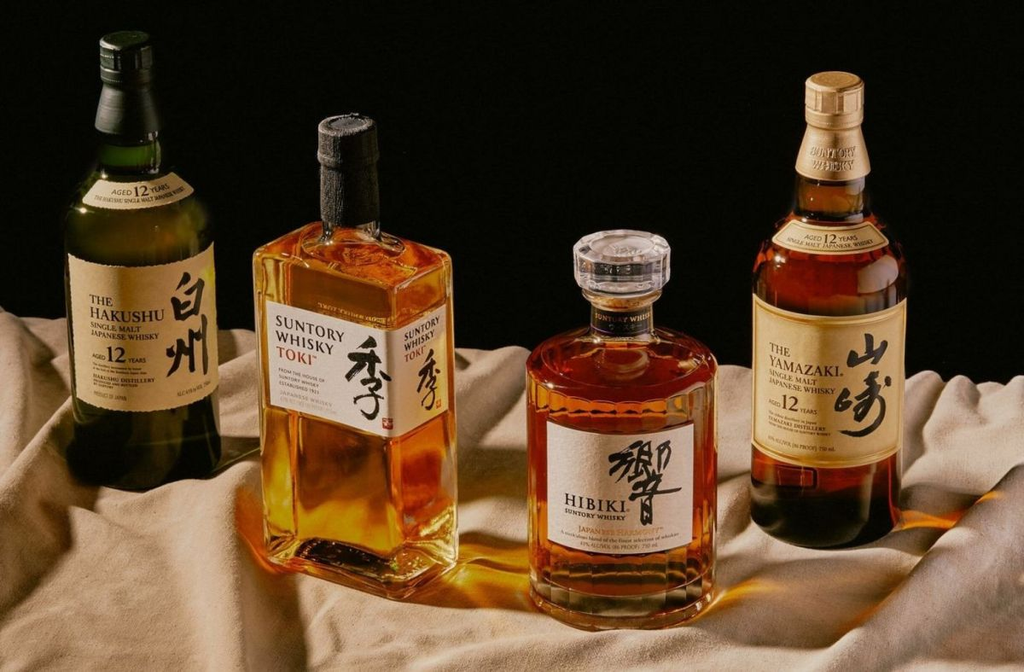
Packaging also influences purchasing decisions. Consumers in many markets buy whisky as a gift or collectible. Provenance, presentation and label clarity help communicate quality before the first tasting.
Counterfeit products and misleading imitations of established Japanese brands have appeared in several markets. Producers should therefore protect their brand identity.
Trademark registration in important destination markets can help. Consult a qualified local intellectual property adviser before entering each market.
[VERIFY: Confirm trademark registration procedures, costs and expected timelines in each destination.]
The practical takeaway
Choose a few clear points of difference and support each with evidence.
Prepare three useful materials:
- A one-page brand and distillery introduction.
- A short tasting note for buyers and bartenders.
- A production fact sheet covering origin, ingredients, aging and bottling.
Keep these materials consistent with your labels and official documentation. This preparation helps importers answer questions without discovering conflicting information.
Competing with Scotch
What an exporter needs to understand
Scotch remains a major benchmark in international whisky markets. It has a long history, a wide range of styles and extensive global distribution.
Buyers will compare Japanese whisky with Scotch whether producers encourage the comparison or not.
Japanese whisky cannot compete with Scotch through volume or historical reach alone. Instead, it can offer a distinctive profile, carefully managed production and a credible craft story.
The goal is to offer a different experience, not a cheaper imitation.
How it plays out in the destination market
Many buyers use Scotch as a familiar reference point when assessing whisky. Describing a product as “like Scotch, but Japanese” places it in a category where Scotch already has an advantage.
Instead, explain what makes your whisky distinctive. Focus on its cask program, local climate, blending approach or ingredients.
Pricing requires the same care. Positioning Japanese whisky slightly below comparable Scotch products may encourage initial trials. However, that strategy can make future premium positioning more difficult.
A premium price needs a convincing reason. Buyers should be able to taste or verify that difference.
The practical takeaway
Treat Scotch as a reference point rather than a model to copy.
Describe your whisky through its own characteristics. Avoid unnecessary discounting and communicate age, origin and blend information honestly.
A clear point of difference gives Japanese whisky its own place in the market. Competing through discounts alone can weaken its long-term positioning.
A positioning playbook
How this channel actually works abroad
Most overseas markets require producers to work with licensed importers. Some markets also involve distributors between importers, retailers and hospitality businesses.
The United States, for example, operates through a three-tier distribution system. Its requirements also vary by state.
[VERIFY: Confirm current destination-specific distribution structures, including EU excise and bonded-warehouse arrangements and US state-level three-tier requirements.]
Consumers generally access imported whisky through three main channels:
- Specialist spirits retailers: These stores introduce premium products to knowledgeable buyers and collectors.
- Bars and restaurants: Hospitality businesses help consumers discover new expressions through tastings and recommendations.
- E-commerce: Online retailers reach collectors and customers who actively follow Japanese whisky.
Travel retail can provide another opportunity in selected markets.
Specialist retailers and bars help establish a brand’s reputation. Online channels can extend its reach and support repeat purchases.
Fit for your product and price tier
Choose sales channels that match your whisky’s positioning.
Rare, limited bottlings suit specialist retailers and collector channels. These buyers understand scarcity and appreciate detailed production stories.
Core expressions work well in bars and broader specialist retail. These channels depend more on consistent supply and repeat orders.
Choose importers based on their category knowledge and commitment, not company size alone. A smaller importer who actively promotes your whisky may deliver better results than a large distributor with hundreds of competing brands.
Before signing an agreement, ask potential partners:
- What alcohol import licenses do they hold?
- How many Japanese whisky brands do they represent?
- How do they manage limited allocations?
- Who handles local label approval?
- Which retailers, bars and distributors do they serve?
Clear answers help you assess whether an importer understands your product and its market.
A practical export sequence starts with one destination and one hero expression.
First, confirm Japan-side export procedures and the destination’s classification and labeling requirements. Then select a licensed importer and arrange compliant sample shipments.
Once both sides approve the product details, begin with a modest commercial order.
[VERIFY: Confirm current National Tax Agency (NTA) export procedures, applicable licensing and tax requirements, and sample-shipment rules for each destination. Alcohol samples may also require handling through a licensed importer.]
Where JapanPint’s operator view applies

JapanPint operates several channels within Japan. These include CraftBeer.co.jp, OmoriMart.com and Jasumo.com, alongside Amazon Japan, Rakuten and Yahoo Shopping.
These platforms serve the domestic Japanese market. They do not constitute an overseas distribution network, and JapanPint does not claim to have a network of overseas importers.
Our value in outbound projects comes from our experience on the import side. We apply that operational knowledge in reverse to help Japanese producers prepare for overseas buyers.
We understand what licensed importers need to review. We also understand how label checks, product notifications and supporting documents work. This experience helps identify common documentation gaps before producers approach foreign markets.
In practice, we help producers prepare consistent SKU information, accurate ABV and age data, and labels ready for importer review.
We do not provide fixed export costs or timelines. The actual requirements depend on the destination, label specifications and number of SKUs.
Positioning Japanese whisky overseas requires honesty, preparation and patience. Origin statements, allocation decisions and product documentation all influence the outcome.
Tell us about your whisky range and target markets through our contact form. We can review your labels and SKUs against the information overseas importers typically expect.
You can also contact us directly at su*****@*******nt.com.