Is Your Alcohol Brand a Good Fit for the Japanese Market? A Qualifying Checklist
 By
By 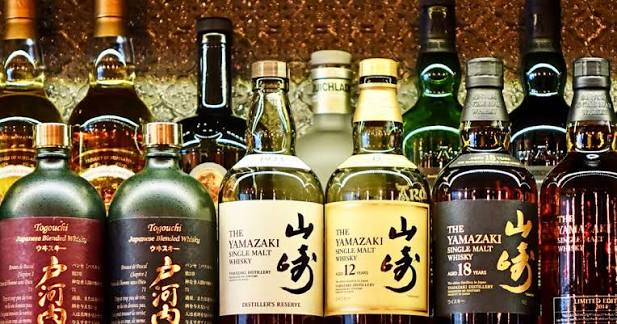
Before you spend months on licensing discussions and label redesigns, answer a simpler question first: does your product fit what Japan is buying right now? If you’re trying to figure out whether you can sell your brand in Japan profitably, the answer depends less on ambition and more on a few concrete factors. Category, price point, and brand story all matter. This checklist walks through each one.
Product categories that move in Japan

What a foreign brand needs to understand
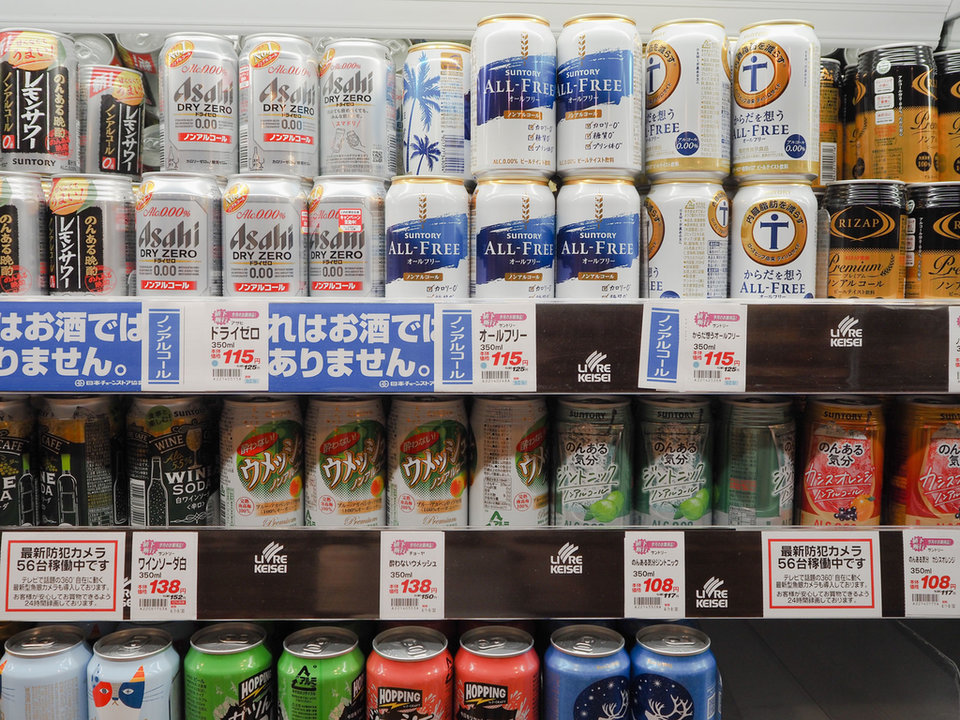
Not every alcohol category is having the same moment in Japan. Beer remains the largest single category by value, with off-trade retail making up roughly 70% of that channel mix, while RTDs and hard seltzers are among the fastest-growing segments, skewing younger and more health-conscious. Japanese whisky’s global reputation is also pulling attention toward the whisky and spirits category more broadly, and low- and non-alcohol products are expanding quickly, even from a small starting base.
The throughline across all of these is premiumization — Japan’s drinking population is shrinking and aging, so volume is flat to declining, but value holds because consumers are paying more per occasion. A brand that fits this shape has a real tailwind. A brand built purely on volume and low price is fighting the market’s actual direction.
How it plays out in the import process
Category matters to the import process itself, not just to positioning. Beer, happoshu, and third-category beverages are unifying under a single liquor tax rate from October 2026, which changes the cost model for any beer-adjacent brand entering around that window. Spirits sit in a separate, higher tax band with a surcharge above a certain ABV threshold, and wine has been unified with sake under the same tax treatment — each category carries a genuinely different tax and labeling path, not just a different shelf placement.
The practical takeaway
Know which category you’re actually in before you model costs or timeline, because the regulatory path — and the tax line — differs meaningfully between beer, spirits, wine, and RTDs. A category that’s growing in Japan is a good sign, but it’s not a substitute for understanding the specific tax and labeling rules that apply to your product.
Price-point and premiumization realities
The variables that drive the number
What a bottle needs to sell for in Japan to make sense commercially depends on your production cost, the liquor tax band your category falls into, customs duty, the 10% consumption tax, and the margin your distribution channel takes between import and shelf. None of these stack the same way for a $12 retail spirit as they do for a $60 one, which is exactly why “can I sell profitably in Japan” doesn’t have a single answer across brands.
A realistic range (not a firm quote)
What can be said with confidence: Japan’s market rewards mid-to-premium positioning far more reliably than entry-level pricing, because that’s where the actual growth in consumer spending is happening. A brand priced to compete on volume against domestic mass-market alternatives is generally fighting the wrong battle. But translating “premium works better here” into an actual target retail price for your specific product requires running your real cost structure through the Japanese tax and duty calculation — not a general industry range.
Why a label and SKU review is needed to be precise
The gap between “premium positioning tends to work in Japan” and “here’s what your bottle should retail for” is exactly the gap a label-and-SKU review closes. ABV, category, declared value, and bottle size all feed into a real landed-cost number, and that number is what actually tells you whether your price point clears the bar Japan’s market expects.
Label and ingredient red flags to check early
What the regulation requires
A Japanese label has to satisfy both the Food Labeling Act and the Liquor Tax Act at once, and it must carry the mandatory under-20 drinking warning. Underneath the label sits the Food Sanitation Act, which governs ingredient and additive safety and is the basis for the food import notification filed with the MHLW quarantine station — meaning ingredients, not just label wording, can be a red flag if they’re not compliant.
The most common compliance gaps
The gaps that catch brands early are rarely exotic: an additive or ingredient that’s permitted in the home market but restricted or requires disclosure in Japan, a health or nutritional claim on the original label that doesn’t have a clean, compliant Japanese equivalent, and artwork that assumes more label space than remains once mandatory Japanese-language elements are added. Checking these early — before committing to a shipment date — is far cheaper than discovering them at the bonded warehouse.
How localization handles it
Handled properly, this isn’t a translation task bolted onto compliance — it’s a single review that checks ingredients against Food Sanitation Act requirements and label claims against the Liquor Tax Act and Food Labeling Act together, so a brand finds out about a red flag during the qualifying stage, not after goods are already in transit.
Volume expectations for a first shipment

What a foreign brand needs to understand
First shipments into Japan are almost always smaller than brand owners initially expect, and that’s by design, not a failure. Wholesalers and retail buyers want to see real sell-through before committing to larger, ongoing orders, and a smaller first shipment reduces risk on both sides while the brand is still unproven in the market.
How it plays out in the import process
A modest first shipment also simplifies the import process itself — smaller volumes are easier to manage through inspection, bonded-warehouse sampling, and the initial labeling-method notification, and they limit exposure if any compliance issue surfaces on the first run. Brands that insist on a large first order sometimes end up creating exactly the friction they were trying to avoid.
The practical takeaway
Plan your first shipment as a market test, not a full launch. A smaller, cleaner first run that clears without incident builds the credibility — with your distributor and with retail buyers — that makes the second, larger shipment far easier to place.
Brand-story fit with Japanese buyers
What a foreign brand needs to understand
Japan’s alcohol consumers, and the retail and on-trade buyers who decide what reaches them, respond to a clear, specific story more than a generic one. “Award-winning” or “family-owned” on its own doesn’t travel well; a specific founder, region, or production method does, because it gives a Japanese buyer something concrete to explain to their own customers.
How it plays out in the import process
This shows up well after the border-crossing paperwork is done — in how the product gets described on an e-commerce listing, presented on a retail shelf, or pitched to an on-trade buyer. A distributor who understands both the regulatory side and the retail presentation side can carry that story through consistently; one who treats the product as an undifferentiated SKU generally won’t.
The practical takeaway
Before you ship anything, be able to describe your brand in two or three concrete, specific sentences a Japanese buyer could repeat to their own customer. If you can’t, that’s worth solving before the export conversation, not after.
Questions to answer before you ship anything

The items that matter most
Before committing to a first shipment, a brand should be able to answer: what category and tax band does the product fall into, what does the ABV mean for tax and labeling, does the current label and ingredient list clear Food Sanitation Act and Liquor Tax Act requirements, what’s a realistic first-shipment volume, and what’s the concrete story that will carry the brand once it’s on a shelf or storefront.
Why each one is required
Each of these questions maps directly to a step in the import process — category to tax classification, ABV to the surcharge threshold and labeling, ingredients and label to the food import notification and labeling-method notification, volume to how the first shipment moves through inspection and bonded-warehouse sampling, and story to how the product actually performs once it clears the border. Skipping any one of them doesn’t remove the requirement — it just means discovering it later, usually at a more expensive stage.
How to prepare them correctly
The most reliable way to prepare these answers correctly is to work through them with a partner who already holds the import license and handles compliance and distribution as one connected process, rather than assembling separate answers from a broker, a translator, and a consultant who may not be talking to each other.
Every one of these questions comes down to your specific product, label, and SKU count — which is exactly why the next step is a real review rather than a general answer.
Tell us about your product and SKU range through our contact form, and we’ll review where your brand stands for Japan entry. If you prefer email, you can also reach us at su*****@*******nt.com.