Ingredient and Additive Disclosure on Japanese Alcohol Labels
 By
By 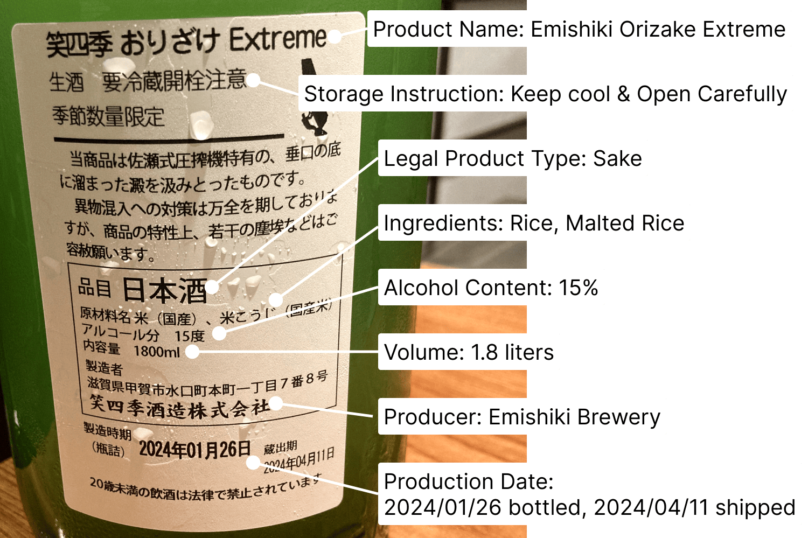
Ingredient and additive review under the Food Sanitation Act determines whether a product can enter Japan. However, ingredient disclosure label Japan requirements address a separate question: what information must appear on the physical label after the product passes the initial compliance review?
This post focuses on the labeling requirements and explains how they connect with the compliance review that comes first.
What Must Be Disclosed
The Direct Answer Up Front
Japanese alcohol labels generally need to disclose ingredients, including relevant additives, under Food Labeling Act requirements. Labels must also include other mandatory information, such as ABV, volume, importer details, and the required under-20 warning.
The exact ingredient disclosure requirements can vary by product category and formulation. Certain alcohol categories may also qualify for specific exceptions or simplified disclosure rules. Confirm the current requirements for your specific product before finalizing the label.
What the Answer Depends on in Practice
The level of detail required depends on the beverage category and the ingredients or additives it contains. A simple spirit with few ingredients usually needs less complex disclosure than a flavored or compounded product.
A Concrete Example for a Foreign Brand
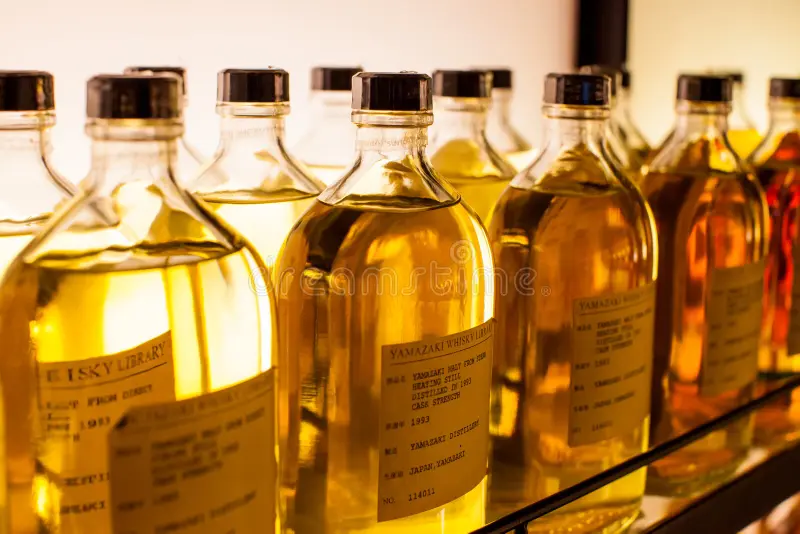
A single malt whisky with no added coloring or flavoring will usually have a straightforward ingredient disclosure. A flavored liqueur may require more detailed disclosure because it contains additional ingredients. The same applies to rum or other spirits with added sweeteners.
Additives, Colorings and Preservatives
What a Foreign Brand Needs to Understand
If your product contains additives, you generally need to disclose them on the label. This includes colorings, preservatives, and flavorings.
Your label should reflect the ingredients that the Food Sanitation Act compliance review has confirmed as present and permitted.
How It Plays Out in the Import Process
The label connects directly to the ingredient compliance review used during the food import notification process. When the review confirms an additive as compliant, use the same accurate information on the finished label.
Do not create a separate ingredient version for labeling. Different versions can create inconsistencies between the product, import documentation, and retail label.
The Practical Takeaway
Use one accurate source of ingredient information throughout the process. The same additive details should support both the food import notification and the finished label.
How Disclosure Interacts With the FSA
The Direct Answer Up Front
Label disclosure and Food Sanitation Act compliance review are closely connected, but they serve different purposes.
The FSA review determines whether an ingredient meets Japan’s requirements. The label tells consumers what the product contains. Your label must therefore reflect the final formulation that passed the compliance review.
What the Answer Depends on in Practice
If the compliance review requires a formulation change, update the label to match the final recipe. Do not use an earlier ingredient list.
A Concrete Example for a Foreign Brand
Suppose a gin contains a botanical extract that does not meet Food Sanitation Act requirements. The producer changes the extract before import.
The final label must reflect the reformulated product. It should not list the ingredients from the original recipe. Any mismatch between the label and the actual contents can create problems during inspection.
Translating Ingredient Names
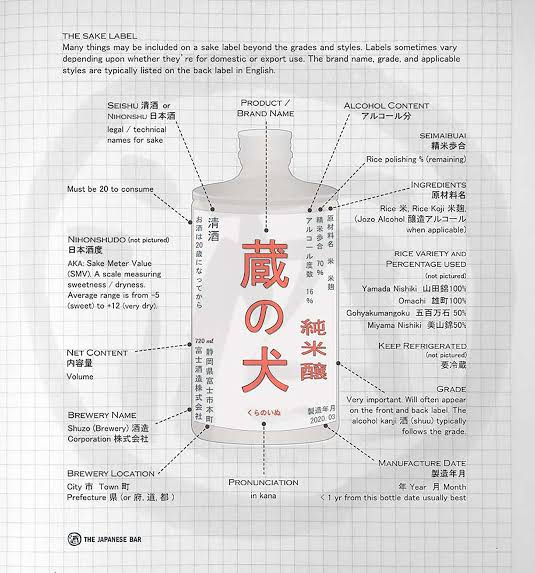
What a foreign brand needs to understand
Ingredient names don’t always have a single, obvious Japanese equivalent — a botanical, a specific grain variety, or a regional ingredient may have multiple possible translations, and choosing the wrong one, or an inconsistent one across different SKUs from the same brand, creates unnecessary confusion.
How it plays out in the import process
Compliance review checks that ingredient translations are accurate against what’s actually in the product, but it doesn’t necessarily standardize terminology across a brand’s full range unless that’s specifically managed — meaning a brand with multiple SKUs sharing common ingredients benefits from consistent translation choices applied deliberately across the whole range.
The practical takeaway
Where your product range shares common ingredients across multiple SKUs, establish consistent Japanese terminology for those ingredients early and apply it uniformly, rather than letting each SKU’s label translation happen independently and potentially inconsistently.
When a certificate supports the label
What the regulation requires
For certain ingredients or claims, supporting documentation — a certificate of analysis, a supplier’s ingredient specification, or similar documentation — may be needed to substantiate what’s disclosed on the label, particularly for additives or ingredients where the specific composition matters to compliance review.
The most common compliance gaps
A common gap is a label disclosure that’s accurate in general terms but lacks the supporting documentation that compliance review or a subsequent inspection might request — a brand stating an ingredient is present without being able to produce the certificate or specification that verifies its exact composition when asked.
How localization handles it
Handled properly, this means gathering the relevant supporting documentation — certificates of analysis, supplier specifications — alongside the label review itself, so that if compliance review or inspection requests substantiation, it’s already on hand rather than needing to be tracked down after a shipment is already in process.
Avoiding disclosure gaps

What the regulation requires
The finished label needs to disclose ingredients and additives completely and accurately, matching both the actual product formulation and whatever was declared during the food import notification process — consistency across all of these is what compliance review is ultimately checking for.
The most common compliance gaps
The gaps that recur most often are a label that’s slightly out of sync with the actual current formulation after a minor recipe adjustment, an additive disclosed for import purposes but not accurately reflected on the retail label, or inconsistent ingredient terminology across a multi-SKU range that makes review more error-prone than it needs to be.
How localization handles it
Handled properly, ingredient and additive disclosure gets managed as a single, consistent thread running from formulation through food import notification to the finished label — one accurate source of ingredient truth referenced at every stage, rather than three separately maintained versions that can drift out of alignment with each other over time.
Getting ingredient disclosure right on your label starts with the same accurate formulation review that clears your product through customs in the first place.
Tell us about your product and SKU range through our contact form, and we’ll review where your brand stands for Japan entry. If you prefer email, you can also reach us at su*****@*******nt.com.