Food Sanitation Act compliance for imported alcohol: a plain-English guide
 By
By 
The Food Sanitation Act often catches foreign brand owners off guard. The law does not target alcohol specifically. Instead, it provides Japan’s general food-safety framework, which also covers alcoholic beverages. Most online guidance focuses on food imports rather than beverage brands.
This post explains what the Food Sanitation Act requires when the product is alcohol. It also covers the main friction points and the mistakes that can delay a product before it reaches a wholesaler’s shelf.
What the FSA requires of alcohol
The direct answer up front
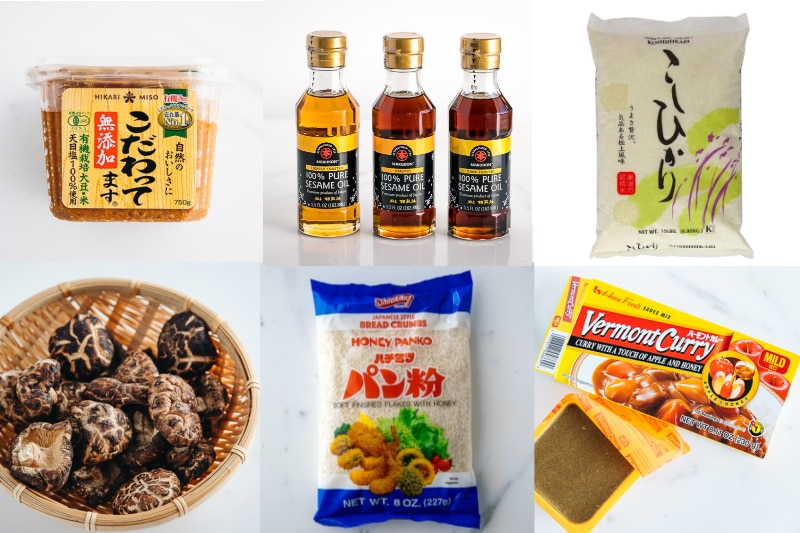
The Food Sanitation Act requires food and beverages sold in Japan to meet applicable safety and labeling standards. Alcohol falls within this framework.
The importer must also file a food import notification with the MHLW quarantine station before the product enters distribution.
The Food Sanitation Act operates separately from the Liquor Tax Act. The Liquor Tax Act covers taxation and certain labeling requirements. As a result, an alcohol product must satisfy the requirements that apply under both laws.
What the answer depends on in practice
The level of scrutiny depends largely on the product’s ingredient profile.
A straightforward fermented or distilled product may face a simpler review. Examples include wine, sake, and classic single malt whisky with no unusual additives.
Flavored spirits and RTDs can require closer review. This includes products with added colorings, sweeteners, preservatives, or flavoring compounds.
The more additives a product contains, the more carefully the importer needs to check its formulation against Japan’s permitted-additive standards.
A concrete example for a foreign brand
Consider a traditional pot-still gin that uses juniper and classic botanicals. Its FSA review may follow a more predictable path than a modern flavored gin with a novel citrus extract or coloring agent.
Both products qualify as gin to consumers. However, their ingredient profiles can create different regulatory questions.
Ingredient and additive scrutiny
What a foreign brand needs to understand
Japan reviews every ingredient in an imported food or beverage against its applicable standards.
This review covers more than the base spirit and alcohol content. It can also cover colorings, preservatives, stabilizers, and flavoring compounds.
An additive that your home market permits may not have the same status in Japan. The two regulatory systems do not always align.
How it plays out in the import process
This stage often creates problems for first-time exporters. Many brands develop their products according to the rules of their home market.
They may only check Japan’s additive requirements after a Japanese buyer expresses interest. That approach can create problems close to the shipping date.
If Japan does not permit an additive at the level used in the product, the importer of record needs to identify the issue before shipping.
Do not wait until the container has left the port.
The practical takeaway
Check your complete ingredient and additive list against Japan’s standards as early as possible.
Ideally, complete this review before you confirm the shipment date. For an export batch, this check should happen before production rather than after the goods leave the factory.
Permitted vs. prohibited additives
How the two options actually differ
After reviewing the ingredient list, an additive will generally fall into one of two practical categories. Japan may permit it at the concentration used, or the product may require a change.
If Japan does not permit the additive, the brand has limited options. You may reformulate the product for Japan or decide not to sell that product in Japan.
Cost, speed and control trade-offs
A Japan-specific formulation adds cost and operational complexity. The brand may need separate production runs, new labels, and additional inventory controls.
However, this approach allows the brand to enter Japan without changing the formulation sold in other markets.
Choosing not to reformulate keeps production simpler. However, the brand cannot sell that product in Japan if the formulation does not meet the applicable requirements.
In some situations, a brand may explore a longer regulatory review or approval process. That option depends on the specific additive and applicable Japanese requirements.
How to decide which fits your situation
Volume potential often influences this decision.
A flagship product with strong potential in Japan may justify a Japan-specific formulation. A smaller or secondary SKU may not justify the additional cost until the brand has enough Japanese sales data.
Discuss this decision with your import partner before you finalize your production plan.
How testing fits in
The direct answer up front
Laboratory testing under the FSA process happens when a shipment is selected for surveillance or an inspection order — samples are drawn at a bonded warehouse and tested for things like additive concentration, residual solvents, or microbiological safety, depending on the product category.
What the answer depends on in practice
Not every shipment is tested; selection can be random or targeted based on product category, origin, or prior findings. Products with more complex formulations or from categories with a history of issues tend to see more frequent testing than simple, traditional products. Testing adds time to the clearance process, which is why it’s worth planning for as a possibility rather than an exception.
A concrete example for a foreign brand
A flavored RTD using a newer flavoring compound might reasonably expect a higher likelihood of being selected for testing than a traditional unflavored beer, simply because the ingredient profile is less familiar to Japanese regulators.
Documentation that smooths clearance
What a foreign brand needs to understand
The single biggest factor in how quickly FSA review proceeds is the quality of the documentation submitted alongside the food import notification — complete ingredient disclosures, clear additive information, and manufacturing details that leave nothing for the quarantine station to query.
How it plays out in the import process
Vague or incomplete documentation — an ingredient listed only as “natural flavor” without specifics, for instance — routinely triggers follow-up requests that add days or weeks to a timeline. Brands that supply full technical specification sheets, translated where necessary, tend to see materially smoother clearance than those who assume a basic label is sufficient documentation.
The practical takeaway
Treat your FSA documentation with the same rigor you’d apply to a regulatory filing in your home market. A little extra detail upfront is far cheaper than a stalled shipment sitting in bond.
Where brands most often fail
What goes wrong and why
The most common failure point isn’t a dangerous ingredient or a serious safety issue — it’s brands assuming their existing home-market formulation and documentation will simply transfer to Japan without review. Additives that are unremarkable at home turn out not to be on Japan’s permitted list; labels that are perfectly legal elsewhere don’t carry the required Japanese disclosures; ingredient lists that pass casually in one market draw detailed queries in another.
The real-world cost of getting it wrong
When this is discovered after a shipment has already left port, the brand faces real costs: goods held in bond, a compressed or missed launch window, and in some cases reformulation or relabeling that has to happen while inventory sits uncleared and continues accruing storage costs at the bonded warehouse.
How to prevent it before you ship
The fix is straightforward but requires discipline: have your full formulation and label reviewed against Japan’s FSA and labeling standards before you commit to a shipment date, not after the container is already at sea. An experienced importer of record can usually flag the likely problem areas from a formulation sheet alone, well before anything ships.
Food Sanitation Act compliance isn’t complicated in principle, but it rewards brands who do the homework early and penalizes those who don’t. Whether your current formulation and labels will clear smoothly is something worth checking against your actual ingredient list and SKU range.
Tell us about your product and SKU range through our contact form, and we’ll review where your brand stands for Japan entry. If you prefer email, you can also reach us at su*****@*******nt.com.