Exporting Scotch Whisky to Japan
 By
By 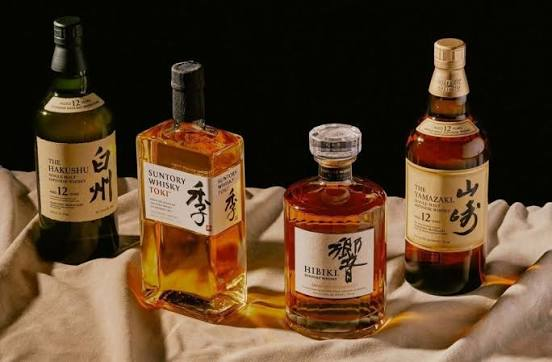
Scotch occupies a nearly unmatched position in the Japanese spirits market. The category has deep enthusiast infrastructure, decades of import history, and buyers who take it seriously. That depth creates an advantage, but it also raises the bar for new entrants. Here’s what it actually takes to export scotch japan enthusiasts will take seriously.
Scotch’s standing in Japan

What a foreign brand needs to understand
Japan has one of the world’s most sophisticated whisky cultures. Its domestic whisky industry has engaged deeply with Scotch traditions and techniques for decades.
As a result, Japanese buyers often have strong category knowledge. This applies to specialty retailers, whisky bar owners, and individual collectors. Their knowledge can match or exceed what you find in many Western markets.
How it plays out in the import process
This sophistication creates both an opportunity and a challenge for a new Scotch brand. You do not need to explain what Scotch is or why it matters. Japanese buyers already understand the category.
However, generic positioning will not cut through in such a knowledgeable market. Buyers can quickly assess whether a distillery’s story, cask program, or age statement offers something distinctive.
They can also recognize when a product follows a fairly standard approach within the category.
The practical takeaway
Bring real specificity to the Japanese market. Highlight your distillery’s character, cask strategy, regional style, and genuine points of difference.
Do not rely on “Scotch” alone as your selling point. Japanese whisky buyers value depth and can quickly identify a shallow pitch.
GI and labeling considerations
What the regulation requires
“Scotch Whisky” is a protected geographical indication. Only whisky that meets the defined production and origin requirements can use the designation.
In Japan, your labels must also satisfy the Food Labeling Act and Liquor Tax Act framework. Requirements include Japanese-language ingredient and allergen information, the Japan-based responsible party’s name and address, ABV, tax category, and the mandatory under-20 warning.
The most common compliance gaps
The GI itself rarely creates a problem for a genuine Scotch producer. More often, producers encounter the same labeling issue that affects other alcohol categories: ABV discrepancies.
These discrepancies can become especially important for cask-strength and limited-release expressions. Batch variation can change the final ABV, so you need to verify the figure for each relevant SKU.
Do not assume that every batch matches the standard bottling strength.
How localization handles it
You can preserve the core identity of your original label while adding the Japanese disclosures required for the market.
A back-label approach often works well. It allows you to retain the established front-label design, age statement, distillery name, and regional identity.
At the same time, verify the ABV for each cask-strength or single-cask release. This approach protects both brand identity and labeling compliance.
Tax on aged high-ABV Scotch

The variables that drive the number
Scotch, like all spirits, falls into the higher liquor tax band under the Liquor Tax Act, with a surcharge applying above a certain ABV threshold — a meaningful consideration for cask-strength expressions, which often sit well above standard 40-46% bottling strength. Age itself doesn’t directly affect tax rate, but higher-ABV cask-strength releases common in premium and collector-focused Scotch do cross into surcharge territory. [VERIFY: current spirits tax rates and the exact ABV surcharge threshold, as these figures should be confirmed before finalizing pricing.]
A realistic range (not a firm quote)
Because tax liability scales directly with ABV once you’re past the surcharge threshold, a premium range including both standard-strength and cask-strength expressions will carry a genuinely different landed cost profile across the range — not a uniform markup you can apply evenly across every SKU.
Why a label and SKU review is needed to be precise
Your actual tax liability depends on the precise ABV of each specific expression in your range, which is exactly the kind of detail that only resolves into a real number once your SKUs are reviewed individually, rather than estimated from a general “Scotch” assumption.
Premium positioning
How this channel actually works in Japan
Scotch in Japan moves through a distribution landscape ranging from mainstream retail (for well-known blended and standard-strength expressions) to highly specialized whisky retail, dedicated whisky bars, and collector-focused e-commerce for premium, limited, and cask-strength releases. Japan’s existing whisky enthusiast infrastructure means there are real, established channels specifically built for exactly this kind of product.
Fit for a foreign brand’s product and price tier
A smaller or independent Scotch producer, particularly one without the scale to compete for mainstream retail shelf space against major established brands, is generally better positioned in specialty whisky retail and e-commerce, where Japan’s premiumizing market rewards genuine quality and story over broad availability. This aligns naturally with how most independent and craft-scale Scotch producers are already positioned in other export markets.
How JapanPint’s owned channels apply
JapanPint distributes through its own channels — CraftBeer.co.jp, OmoriMart.com, and Jasumo.com — alongside Amazon Japan, Rakuten, and Yahoo Shopping, giving a Scotch brand access to both curated specialty positioning and broader marketplace visibility without needing to build separate relationships with Japan’s whisky-specific retail network independently.
Channel strategy
The variables that drive the number
Which channels make sense for your Scotch brand depends on your production scale, price tier, and whether your range includes standard-strength expressions suited to broader placement or cask-strength and limited releases suited to specialty and collector channels. A brand with both needs a channel strategy that treats these differently rather than a single blanket approach.
A realistic range (not a firm quote)
A standard-strength core expression might reasonably target a mix of specialty retail and broader e-commerce presence, while a limited cask-strength release might be positioned more narrowly toward collector-focused channels and premium on-trade placement — different visibility and volume expectations for each.
Why a label and SKU review is needed to be precise
The right channel mix for your specific range depends on exactly what’s in that range — how many SKUs, what strengths, what production volumes — details that only become clear through an actual review of your product lineup rather than a general strategy applied uniformly to “Scotch” as a category.
A Scotland-to-Japan roadmap

What a foreign brand needs to understand
Exporting Scotch to Japan follows the same core import sequence as any spirits category: a licensed importer of record, prior consultation with the quarantine station, food import notification, duty and liquor tax assessment (with real attention to ABV-driven tax surcharges), labeling-method notification, and distribution. What’s specific to Scotch is the sophistication of the buyer base and the tax precision needed across a range that may span standard and cask-strength expressions.
How it plays out in the import process
In practice, a Scotch producer’s roadmap should start with an honest look at what genuinely differentiates the brand within a category Japanese buyers already know well, followed by accurate ABV and tax classification across every SKU in the range, and a channel strategy that matches each expression to the audience most likely to value it.
The practical takeaway
Scotch’s established reputation in Japan means you’re not building category awareness from zero — but it also means you’re entering a market with genuinely knowledgeable buyers who expect specificity. Getting your tax classification, label compliance, and channel positioning right for your specific range is what turns that existing enthusiasm into actual sales.
Whether your specific range — standard and cask-strength alike — is priced, labeled, and positioned correctly for the Japanese market is a question a review of your actual SKUs can answer with precision.
Tell us about your product and SKU range through our contact form, and we’ll review where your brand stands for Japan entry. If you prefer email, you can also reach us at su*****@*******nt.com.