Trade Shows and Tastings: Launching Japanese Alcohol in New Markets
 By
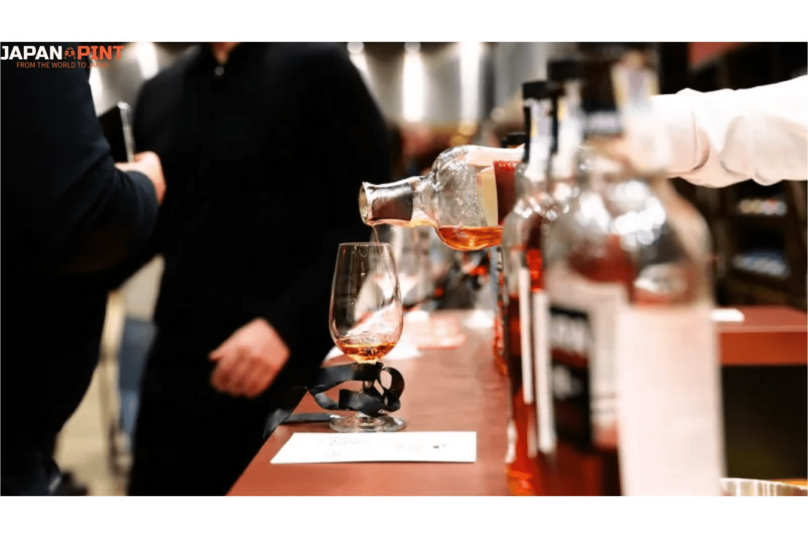
A trade show can compress months of introductions into a few days, and it can also burn a year’s marketing budget with nothing to show for it. A producer planning a trade show sake export push needs to choose the right event, arrive with buyers already warmed up, run a booth that fits the product, and follow up while interest is fresh. This guide covers each step from an operator’s seat.
Choosing the right shows
What an exporter needs to understand
Japan’s drinking population is shrinking and aging, and domestic volume is flat to declining, so overseas events have become a standard route to new buyers. Not every show suits every producer. Events fall into rough groups: large general food and drink fairs, spirits and wine trade shows, sake-specific events, bartender and on-trade gatherings, and consumer tastings. Each draws a different audience, and each rewards a different product.
The right question is who attends, not how big the show is. A giant fair full of mass-market buyers is a poor place for a limited-run junmai daiginjo, while a small specialist event with sommeliers and independent importers may be ideal. [VERIFY: current dates, attendance profiles, exhibitor rules and costs for each candidate show, using the organizers’ published information.]
How it plays out in the destination market
Many shows are open to the trade only, and some allow public tastings under local licensing rules that vary by country and sometimes by city. Whether you may pour, sell or give away samples depends on the event’s permits and the destination’s law. [VERIFY: rules on pouring, sampling and sales at trade and consumer events in each destination, including any age-verification and temporary-license requirements.]
Importers also use shows to find new suppliers, so a visible presence tells them you are serious. A producer who exhibits once and disappears is easily forgotten, while one who returns with a consistent story builds recognition.
The practical takeaway
Shortlist two or three events where your category and price tier are clearly represented, and ask each organizer who actually attends. Choose one market and one show to start, as in any export plan, and treat the first as a learning exercise, not a verdict.
Pre-show buyer outreach
What an exporter needs to understand
The shows that pay off are usually the ones where the meetings were arranged beforehand. Walking in cold and hoping buyers will stop is the most expensive way to meet them. Most organizers publish exhibitor and visitor information, and many offer matchmaking or buyer lists. [VERIFY: whether each show provides buyer lists, matchmaking or pre-registered visitor data, and the terms of use.]
Outreach should be short, specific and respectful. Buyers receive many messages, and Japanese producers sometimes err in either direction: too little detail to be useful, or a long catalog nobody reads.
How it plays out in the destination market
A good first message states who you are, what the product is, why it suits that buyer’s portfolio and when you will be at the show. It attaches a one-page product sheet with accurate specifications, in the buyer’s language. It does not promise exclusivity or prices on first contact.
Samples are part of preparation, but alcohol samples are still alcohol shipments and generally need to move through a licensed importer in the destination country, not be posted informally. [VERIFY: sample-shipment and import rules for show samples in each destination, including whether bottles for pouring at the event require an importer or a temporary import arrangement.]
The practical takeaway
Prepare a short buyer list of importers who already carry products like yours, send a concise introduction a few weeks ahead and book meeting times where possible. Include only facts you can substantiate, and keep product information identical everywhere it appears.
Booth and tasting strategy
The variables that drive the number
Show costs vary enormously and depend on many things: the event’s stand fees, booth size and build, shipping of bottles and materials, any importer or customs arrangements for pour samples, travel and accommodation, interpretation, printed materials, and staff time before and after. A small table at a specialist event and a built stand at a major fair are different undertakings.
Several product factors also drive the plan: how many SKUs you pour, how sensitive they are to heat and light, how much education each needs, and whether your labels are already ready for the destination.
A realistic range (not a firm quote)
We do not quote firm figures, and a number from one event is no guide to another. What can be said is that a focused presence, with one hero product and perhaps one or two supporting expressions, usually serves a producer better than a table crowded with the whole range. A smaller, well-run booth tends to produce better conversations than a large one that nobody has time to explain.
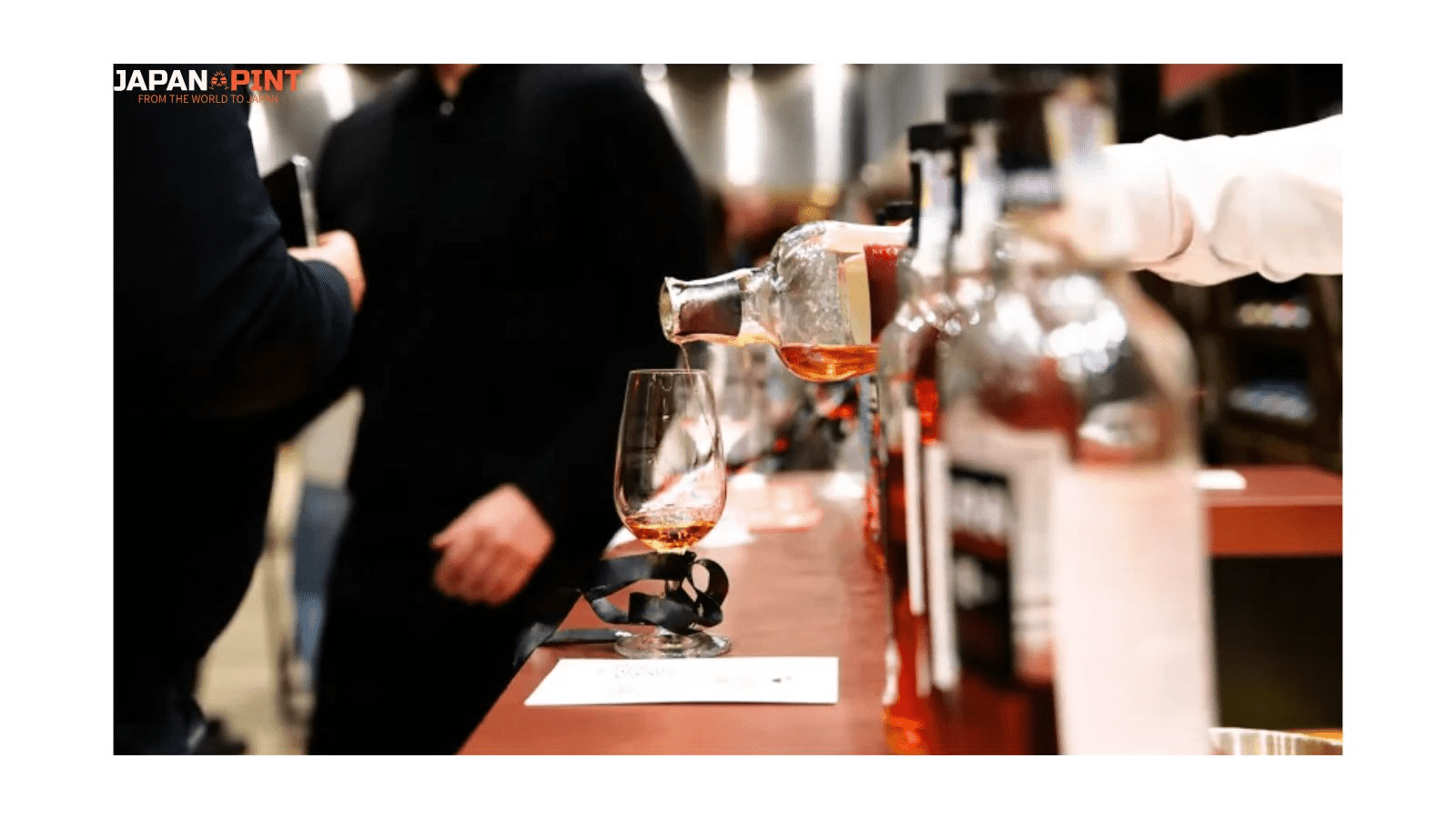
Plan the tasting around the product. Delicate sake needs proper storage and serving temperature, shochu and gin benefit from suggested serves, and whisky rewards a calm setting and a clear explanation. A sommelier or bartender who can pour and explain in the local language is worth more than a banner.
Why a label and SKU review is needed to be precise
Every bottle poured or displayed is a SKU with its own label, ABV and documentation, and a bottle with a label that does not meet local rules can cause problems at the show or at the border. A realistic budget therefore starts from a review of your actual labels and SKU list, covering label changes, destination-language back labels and the documentation an importer will ask for. [VERIFY: label requirements for bottles shown or poured at events in each destination.]
Following up to convert
What an exporter needs to understand
Most of the value of a show arrives after it ends. Buyers meet dozens of producers in a few days, and the ones who follow up promptly and precisely are the ones remembered. Delays of several weeks lose most of the goodwill built at the booth.
Follow-up should be specific. A buyer who asked about minimum quantities, label requirements or storage wants a clear answer, not a general thank-you.
How it plays out in the destination market
Within a few days, send each serious contact a short message that refers to the conversation, answers their questions and proposes a next step, such as a call or a sample shipment through a compliant route. Keep notes on each contact: what they carry, what they asked and what you promised.
Importers will also want to confirm the practical basics: classification, label content, duty treatment and who handles the Japanese-side export steps. [VERIFY: current export exemption and licensing requirements administered by the NTA, and destination classification, label and duty requirements.] A producer who has these answers ready appears far more credible than one who has to find them.
The practical takeaway
Treat follow-up as a scheduled task. Block time in the week after the show, answer every serious inquiry in writing, and keep promises small and exact. If a buyer shows real interest, move toward a modest first order, not a grand agreement.
Measuring ROI
What an exporter needs to understand
Return on a show is easy to misjudge. Immediate orders are rare, so counting only same-week sales makes almost every show look like a failure. A better view looks at the number of qualified conversations, the number of importers who requested samples, the number of serious negotiations opened and eventual orders over the following months.
Costs are easier to count than benefits, which is why shows are often judged too harshly or too generously. Setting measures in advance keeps the review honest.
How it plays out in the destination market
Track a few things consistently: who you met, what category they handle, how qualified they were, what happened next and how long it took. Over a season or two, patterns emerge. Some shows produce good importers but slow decisions, others produce fast contacts of lower quality.
Avoid the temptation to chase volume by discounting to close a deal. Buyers abroad respond to quality and a truthful story, as they do in Japan’s own premiumizing market, and a discount offered at a show to win an order undermines the premium position that justifies the trip.
The practical takeaway
Define success before you book: a target number of qualified importer conversations, a target number of sample requests, and a time frame for judging results. Review honestly afterward and decide whether to repeat, change the show or change the approach.
A trade-show playbook
What an exporter needs to understand
A workable playbook follows a fixed order, and the sequence matters more than the speed.
- Choose one destination, one show and one hero product.
- Confirm the Japanese-side export steps, including the liquor tax treatment of exported alcohol and who is licensed to handle the export. [VERIFY: current export exemption and licensing requirements administered by the NTA.]
- Confirm classification, label and duty requirements for the destination with a prospective importer, in writing.
- Prepare destination-language materials: a one-page explainer, specification sheets and a short tasting note.
- Contact buyers ahead of the show and book meetings.
- Run a focused booth, follow up quickly and review the results against your pre-set measures.
How it plays out in the destination market
Timelines and costs vary widely with the event, the destination, the classification outcome and the partner. Stand fees, freight, duty and excise on show bottles, label changes and travel each add variables. We don’t quote firm figures for any of these, because a realistic number depends on reviewing your labels and SKU count.
JapanPint’s owned channels (CraftBeer.co.jp, OmoriMart.com and Jasumo.com), along with Amazon Japan, Rakuten and Yahoo Shopping, operate inside Japan, so they are not an overseas distribution network, and we do not claim otherwise. We also do not claim a network of overseas importers. What we bring to outbound projects is the operator knowledge we use on the import side, applied in reverse: what a licensed importer needs to see from a producer, how labels and notifications are checked, and where documentation tends to fall short.
The practical takeaway
Go to fewer shows and prepare for each one properly. Lead with quality and a clear story, arrive with accurate documentation, and follow up fast. If you plan to launch Japan alcohol abroad through events, the preparation before the show decides most of what happens at it.
Because we sit on the import side of this relationship, we know what a well-prepared producer looks like from the importer’s chair: consistent SKU information, accurate ABV and ingredient data, and labels that are ready for review. The details that decide your outcome are specific to your range and your target market.
Tell us about your range and the markets you’re considering through our contact form, and we’ll review your labels and SKUs against what your target importers will expect to see. If you prefer email, you can also reach us at su*****@*******nt.com.