The Importer of Record Explained: Who Carries the Risk When You Sell Into Japan
 By
By 
If you’re a foreign brand owner looking at the Japanese market, you’ve probably run into the term “importer of record” and wondered exactly what it means for you. The short version: the importer of record japan relationship determines who is legally accountable for your product the moment it crosses the border — and understanding that relationship now will save you from expensive surprises later.
What ‘importer of record’ legally means in Japan
The direct answer up front
The importer of record (IOR) is the entity legally responsible for a shipment once it enters Japan. In alcohol specifically, this means the party who holds the National Tax Agency (NTA) liquor license, files the customs declaration, pays duty and liquor tax, and answers to regulators if something goes wrong with the product. A foreign brand without a Japanese entity cannot act as its own IOR — it needs a licensed partner to fill that role.
What the answer depends on in practice
The exact scope of an IOR’s responsibility depends on the agreement it has with the brand it represents. Some IORs handle only the bare minimum: customs clearance and tax payment. Others, like JapanPint, extend the role to cover Food Sanitation Act compliance, label localization, and distribution. The label “importer of record” tells you who is legally on the hook — it doesn’t tell you how much operational support you’re actually getting. That distinction matters more than most brand owners realize when they’re comparing partners.
A concrete example for a foreign brand
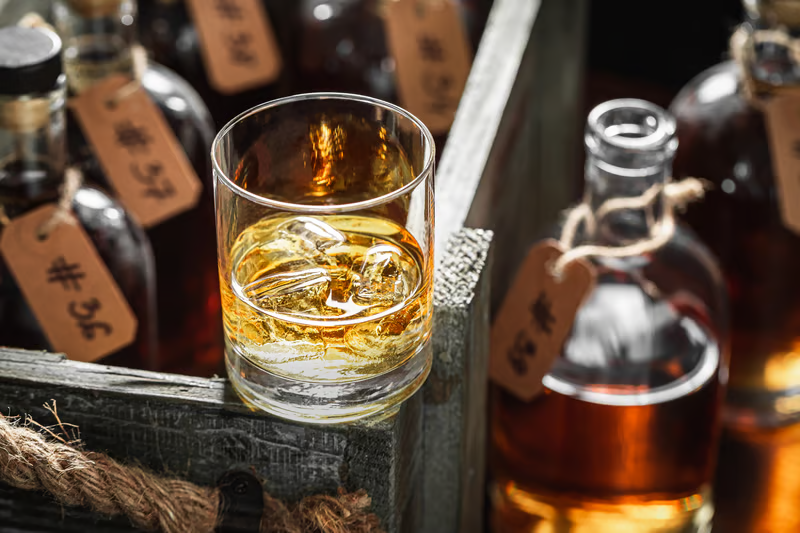
Picture a craft distillery in Scotland shipping its first pallet of whisky to Japan. The distillery has no Japanese entity and no liquor license — nor does it need one. Its IOR files the food import notification with the MHLW quarantine station, clears the goods through Japan Customs, pays the liquor tax under the Liquor Tax Act, and takes on legal responsibility for the shipment from the moment it lands. The distillery’s job is to supply compliant product and artwork; the IOR’s job is to carry everything else across the border correctly.
The liabilities the IOR absorbs
What a foreign brand needs to understand
When you work with an importer of record, you’re not just outsourcing paperwork — you’re transferring real legal exposure. The IOR is the party regulators contact if a shipment fails inspection, if labeling doesn’t meet Food Labeling Act or Liquor Tax Act requirements, or if duty and tax calculations are challenged. This is why the choice of IOR is not a minor logistics decision; it’s a decision about who is standing behind your product inside a regulatory system you don’t yet know well.
How it plays out in the import process
In practice, this liability shows up at several points in the import sequence. If a shipment is flagged for surveillance or an inspection order at a bonded warehouse, it’s the IOR who manages the sampling and lab testing process, not the brand. If a label is later found non-compliant, it’s the IOR who filed the labeling-method notification and who must correct or withdraw the affected stock. The brand feels the commercial consequences — delayed shipments, unsellable inventory — but the direct regulatory relationship sits with the IOR.
The practical takeaway
Because the IOR carries this liability, a competent one will be conservative and thorough before your first shipment ever leaves origin. Prior consultation with the quarantine station at the intended port of entry is a step many generalists skip, but an experienced IOR will push for it precisely because they’re the one who answers if something is wrong. If your prospective partner isn’t asking detailed questions about your ingredients, ABV, and label artwork before quoting you anything, that’s worth noticing.
Why the IOR usually holds the license
The direct answer up front
In nearly every case, the importer of record is also the entity holding the NTA liquor license required to bring alcohol into Japan. This isn’t a coincidence of convenience — it’s a structural requirement. The license and the import liability are bound together, because the license is what authorizes the legal act of importing dutiable alcohol in the first place.
What the answer depends on in practice
There are edge cases where a brand’s Japanese subsidiary or joint-venture partner might hold its own license, separating that function from a third-party IOR. But for the overwhelming majority of foreign brands entering Japan without a local entity, the party who holds the license and the party acting as importer of record alcohol importer of record are the same organization. Trying to split these functions across two unrelated parties introduces coordination risk that most brands don’t need to take on.
A concrete example for a foreign brand
Consider a New Zealand winery evaluating two options: a licensed importer who also distributes, versus assembling its own team of a customs broker, a separate compliance consultant, and a distributor found independently. In the second scenario, the license sits with whichever party the winery contracts for import — but now three different companies must coordinate on timing, on labeling corrections, on tax filings. When something slips between them, it’s unclear whose responsibility it was. A single IOR holding the license removes that ambiguity entirely.
How this differs from a freight forwarder
The direct answer up front
A freight forwarder arranges the physical movement of goods — booking shipping, handling logistics documentation, coordinating with carriers. An importer of record is a legal and regulatory role. A forwarder does not typically hold the liquor license, does not file the food import notification, and does not carry liability for the shipment’s compliance. Confusing the two is one of the most common — and costly — mistakes foreign brands make when planning their first shipment.
What the answer depends on in practice
Some large logistics companies do offer IOR services as an add-on, and some IORs use third-party forwarders for the physical shipping leg while retaining legal responsibility themselves. So the roles can overlap in a given transaction. What determines who is liable alcohol import japan is not who books the container, but who is named on the customs declaration and who holds the license under which the goods are cleared. Always ask a prospective partner directly which role they are actually filling.
A concrete example for a foreign brand
A US spirits brand once assumed that because a logistics company had quoted them competitively on ocean freight, that company would also handle their liquor tax filing and label compliance. It didn’t — the forwarder moved the container to the port and stopped there. The brand had to scramble to find a licensed IOR after the shipment was already in transit, adding weeks of delay and risk. Clarifying this distinction before booking anything avoids that scenario entirely.
Whether your prospective partner is actually authorized to file the labeling-method notification on your behalf, or is simply moving boxes, is exactly the kind of thing worth confirming before you commit to a shipping date.
Protecting your brand inside the IOR relationship
What a foreign brand needs to understand
Handing legal responsibility to an IOR doesn’t mean handing over control of your brand. A well-structured relationship should leave the foreign brand owning its intellectual property, its pricing strategy, and its say over which retail and on-trade channels its product appears in. The IOR’s role is regulatory and operational — not creative or commercial control over how the brand is positioned in market.
How it plays out in the import process
This shows up practically in the agreements you sign before the first shipment. Clear terms should define who owns product data and label artwork, how disputes over compliance costs are resolved, and what happens if the relationship ends — including whether the brand can transition to a new IOR without losing its market presence. A generalist consultant juggling alcohol alongside cosmetics and electronics may not have thought through these alcohol-specific contract points as carefully as a dedicated operator would.
The practical takeaway
Ask direct questions before signing anything: Who owns the label artwork once localized? What happens to unsold inventory if the partnership ends? How are FSA or tax discrepancies handled if they arise after the fact? A partner confident in its own process will answer these plainly, without vague reassurances. That clarity is itself a signal of whether you’re dealing with an operator or a reseller of someone else’s process.
Choosing an IOR that also distributes

How this channel actually works in Japan
The Japanese alcohol supply chain typically runs importer → wholesaler → retail, on-trade, and e-commerce. An IOR that stops at customs clearance still leaves you needing to find, negotiate with, and manage relationships with wholesalers — a slow, relationship-driven process in a market where distributors are often conservative about new foreign brands. An IOR that also owns distribution channels compresses that entire second phase, because the compliance work and the market access happen inside the same accountable relationship.
Fit for a foreign brand’s product and price tier
This matters more for some brands than others. A premium spirits or craft beer brand aiming for a curated presence in specialty retail and e-commerce benefits directly from a partner with existing owned channels, because it shortens the path from cleared customs to actual shelf or cart placement. Japan is a premiumizing market — volume is flat to declining, but value holds because consumers trade up — so a brand entering with a quality story needs a route to the buyers who are willing to pay for it, not just a company that can technically clear a container.
How JapanPint’s owned channels apply
JapanPint holds the NTA liquor license as importer of record and distributes through its own channels — CraftBeer.co.jp, OmoriMart.com, and Jasumo.com — alongside listings on Amazon Japan, Rakuten, and Yahoo Shopping. That means the same organization that clears your shipment through customs and files your compliance paperwork is also the one putting your product in front of Japanese buyers. There’s no handoff between a compliance company and a separate distributor to manage, and no gap where accountability for your brand becomes unclear.
Understanding exactly who carries legal and regulatory risk for your product in Japan is the first real decision in market entry — everything downstream, from timeline to cost to how your brand is presented, follows from it. The right next step is to have your specific labels and SKU range reviewed against Japan’s requirements, since that’s what actually determines your import path and cost.
Tell us about your product and SKU range through our contact form, and we’ll review where your brand stands for Japan entry. If you prefer email, you can also reach us at su*****@*******nt.com.