Japanese Gin’s Botanicals: A Storytelling Advantage Abroad
 By
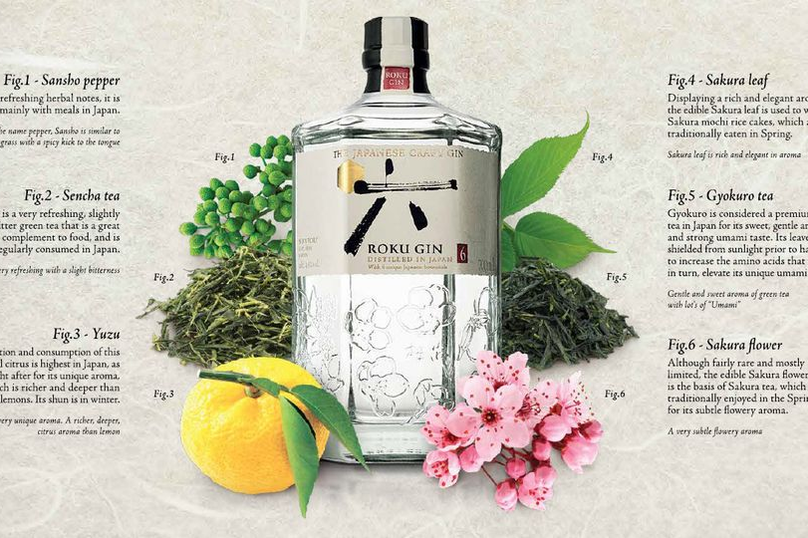
Japanese gin has a storytelling asset that most new craft gins cannot match: botanicals that are vivid, specific and rooted in place. A producer building a case around japanese gin botanicals has to decide which ingredients carry the story, how to describe them accurately, and how to keep marketing, labels and documentation consistent. This guide covers each of those from an operator’s seat.
Signature Japanese botanicals
What an exporter needs to understand
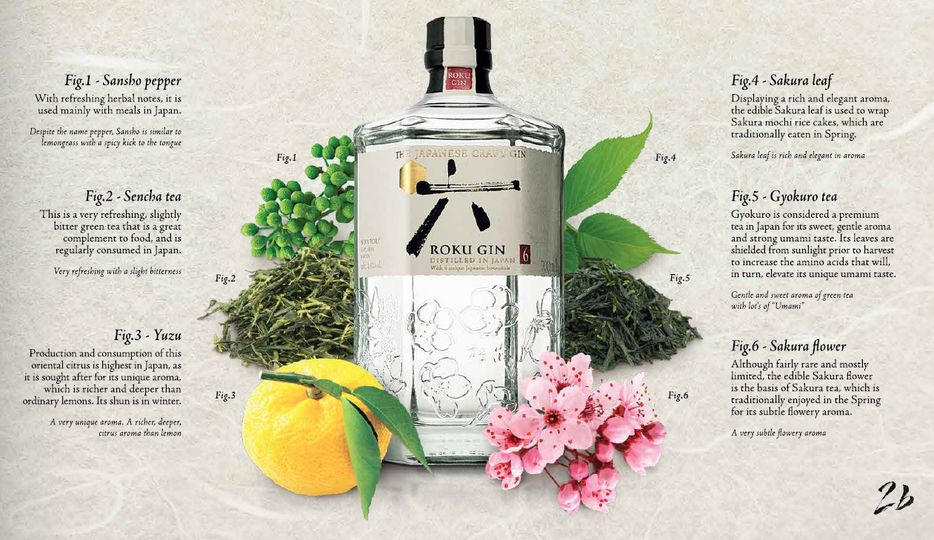
Japan’s drinking population is shrinking and aging, and domestic volume is flat to declining, so craft distillers increasingly treat overseas markets as part of the plan. Gin is one of the categories where Japan has something distinctive to offer. Producers draw on yuzu and other citrus, sansho pepper, sakura leaf and blossom, green and roasted teas, shiso, hinoki cypress, ginger, bamboo and local herbs, and some distil with sake lees, rice or other Japanese bases.
These ingredients matter because they are specific. “Citrus and spice” describes a thousand gins. “Yuzu from a named region and sansho from a named valley” describes one. The more precisely you can name an ingredient and its place, the more memorable the product becomes.
How it plays out in the destination market
Bartenders and specialist buyers abroad have already tasted several Japanese gins, so the novelty of the nationality has worn off. What earns attention now is a clear flavor profile and a credible reason for it. A buyer will ask what the gin actually tastes like, how the botanicals are used, and whether the story is true.
Familiarity also varies. Yuzu is widely recognized among drinkers, while sansho and shiso need a sentence of explanation. That difference should shape which botanicals you lead with in each market.
The practical takeaway
Choose a small number of hero botanicals and build the story around them. As in Japan itself, premium quality and a truthful narrative earn far more than a low price, and a Japanese craft gin that competes on price against large international brands gives away its main advantage.
Yuzu, sansho and sakura
What an exporter needs to understand
Three botanicals dominate the category’s imagery, and each carries its own opportunities and pitfalls. Yuzu is bright, aromatic and instantly appealing, but it is also the most widely used, so a yuzu gin faces the most direct comparison. Sansho gives a numbing, citrusy pepper note that is unusual abroad and therefore distinctive. Sakura is seasonal and visual, and appeals strongly to gifting, but its flavor is subtle and easily overstated in marketing.
Accuracy matters most with sakura. A label or story that promises a pronounced cherry blossom character when the liquid delivers a faint floral note sets up a disappointment.
How it plays out in the destination market
A yuzu gin export has to stand apart from other yuzu products. Buyers will compare it with citrus-forward gins from elsewhere and with other Japanese gins, so the differentiators need to be concrete: the region, the way the peel is handled, whether the citrus is distilled or added after distillation, and how the gin behaves in a drink.
Sansho can be a conversation starter for bartenders, who like an ingredient that does something unexpected in a cocktail. Sakura tends to work best as a limited release, a seasonal expression or a gift edition, where its association with spring supports a premium and a story.
Some markets also have specific rules about flavorings and botanicals, and about whether a flavored spirit may be called gin. [VERIFY: gin definition and flavoring or botanical disclosure rules for each destination, including whether post-distillation flavoring affects the class designation.]
The practical takeaway
Match each botanical to a role: yuzu as the accessible entry point, sansho as the distinctive signature, sakura as the seasonal or gift expression. Keep a full, accurate ingredient specification for each, so that what you say in marketing matches what is in the bottle.
Storytelling for the gin boom
What an exporter needs to understand
Gin has been one of the busiest craft spirits categories for years, and many markets are now crowded. That makes storytelling a competitive necessity, not decoration. A story that explains why this gin exists, in a way a bartender can repeat in a few sentences, is worth more than a long list of ingredients.
The strongest stories tie the botanicals to a place and a decision: the distillery’s location, the grower, the reason a particular ingredient was chosen, the technique used to capture it. They are specific and checkable.
How it plays out in the destination market
Buyers and consumers are increasingly alert to invented heritage and vague “Japanese-inspired” claims. A modest, accurate story usually outperforms a grand but doubtful one, and it protects the credibility of the whole category.
Claims also have regulatory weight. What appears on a label can be checked against the product, and a mismatch between the story and the documentation is a reliable way to lose an importer’s trust. Brand identity needs protection as well, since counterfeits and misleading imitations of Japanese products have appeared in several markets. [VERIFY: trademark registration in each destination, ideally with a qualified local IP adviser.]
The practical takeaway
Write two versions of your story: a sentence a bartender can say at the bar and a page an importer can read before committing. Make sure both can survive a follow-up question, and keep your documentation consistent with them.
Cocktail applications

What an exporter needs to understand
Gin is a cocktail spirit first, so bartender adoption often decides whether a brand succeeds. A Japanese gin needs to show how it behaves in a gin and tonic, a martini, a highball-style long drink and a few simple signature serves. Subtle botanicals can disappear behind a strong mixer, while bold ones can dominate a delicate drink.
Bartenders also value consistency. A recipe built around one batch’s flavor will not work if the next batch tastes different, so production control matters as much as the original recipe.
How it plays out in the destination market
Training usually reaches bartenders through the importer or a specialist distributor, with tastings, menu collaborations and staff sessions. A brewery or distillery cannot be everywhere, so it depends on the partner to carry the message.
Samples are part of this, but alcohol samples are still alcohol shipments and generally need to move through a licensed importer in the destination country rather than being posted informally. [VERIFY: sample-shipment rules for each destination.]
The practical takeaway
Prepare a small bartender kit: a one-page explainer in the destination language, three or four tested serves with simple specifications, a short tasting note and the production facts you can stand behind. Recommend a mixer pairing that lets your hero botanicals come through.
Premium positioning
How this channel actually works abroad
Premium gin usually reaches consumers through three doors: the bar trade, specialist spirits retail and e-commerce, with travel retail in some cases. The bar trade often comes first, because a back-bar placement signals quality, and specialist retailers and online sellers then convert that visibility into sales.
In most destination markets you need a licensed importer, and in some the chain continues through distributors to retailers and on-trade venues. The United States, for instance, is organized state by state. [VERIFY: current structure by destination, including excise and bonded-warehouse arrangements in the EU and the three-tier rules in US states.]
Fit for your product and price tier
Japanese craft gin generally belongs in the upper-middle and premium tiers, where its production cost and story justify the price. Entering at the value end puts it against large, efficient brands and undermines the reason it exists.
If your range has a flagship and a more approachable expression, treat them differently. The approachable bottle gives bartenders an easy way in, and the flagship carries the premium narrative. Neither should be priced against everyday gin. Avoid shortcuts that undersell the product, such as describing it as simply a “Japanese version” of an established style.
Where JapanPint’s operator view applies
JapanPint’s owned channels (CraftBeer.co.jp, OmoriMart.com and Jasumo.com), along with Amazon Japan, Rakuten and Yahoo Shopping, operate inside Japan, so they are not an overseas distribution network, and we do not claim otherwise. We also do not claim a network of overseas importers. What we bring to outbound projects is the operator knowledge we use on the import side, applied in reverse: what a licensed importer needs to see from a producer, how labels and notifications are checked, and where documentation tends to fall short.
A gin-story toolkit

What an exporter needs to understand
A practical toolkit has four parts that fit together. First, a botanical sheet listing each hero ingredient, its origin, how it is used and what it contributes. Second, a short and long version of the brand story. Third, a set of tested serves. Fourth, a compliance file holding the ingredient specification, ABV data and the approved labels for each SKU.
The order of work matters more than the speed. Choose one destination and one hero SKU, confirm the Japanese-side export steps, confirm classification and label requirements with a prospective importer, select an importer on category depth and attention, send samples through a compliant channel, and ship a modest first order. [VERIFY: current export exemption and licensing requirements administered by the NTA.]
How it plays out in the destination market
Classification is the delicate point for gin. Whether a spirit may be called gin depends on the destination’s definition, which usually centers on juniper and on how the botanicals are added, and some juniper-light or unusual-base Japanese gins sit awkwardly against a strict definition. [VERIFY: gin definition and any labeling consequence for each destination.]
The label should be built alongside the product. Keep your Japanese brand identity on the front label and add the required destination-language information on a back label, covering class designation, alcohol content, net contents, producer or importer details and country of origin. Confirm the designation with your importer before anything goes to print. [VERIFY: current label requirements, standards of fill and ABV tolerance for each destination.]
Whether a given label and classification statement will hold up in a specific destination is exactly the kind of thing worth checking before a print run. We apply the same discipline from our import work, where a label and SKU review before filing prevents expensive surprises, but in reverse. We do not quote firm costs or timelines, because a realistic number depends on your labels and SKU count.
The practical takeaway
Take one market at a time, lead with two or three provable botanicals rather than a low price, and keep your story and documentation aligned. If you build your japan gin marketing on that discipline, the botanicals do what they are meant to do: give buyers a reason to remember you.
Because we sit on the import side of this relationship, we know what a well-prepared producer looks like from the importer’s chair: consistent SKU information, accurate ABV and ingredient data, and labels ready for review.
Tell us about your gin range and the markets you’re considering through our contact form, and we’ll review your labels and SKUs against what your target importers will expect to see. If you prefer email, you can also reach us at su*****@*******nt.com.