What the National Tax Agency Looks for in an Alcohol Importer
 By
By 
Your product’s path into Japan depends heavily on the licensing framework administered by Japan’s National Tax Agency (NTA). Your brand may never deal with the NTA directly. However, your Japanese import partner must meet the requirements that apply to its liquor business.
Understanding what national tax agency alcohol licensing involves can help you evaluate potential import partners. It also explains why licensing status matters alongside price, logistics, and distribution.
The NTA’s role in the system

What a foreign brand needs to understand
The National Tax Agency administers Japan’s liquor tax system under the Liquor Tax Act. It oversees liquor taxation and the licensing framework for businesses that handle alcoholic beverages.
The licensing system helps the authorities monitor businesses that sell or otherwise handle taxable alcoholic beverages. It also supports proper tax reporting and collection.
How it plays out in the import process
This tax-focused role explains why liquor licensing involves more than a basic business registration.
The NTA looks at whether an applicant can conduct the licensed business properly. The applicant must meet the requirements that apply to its business activity, premises, management structure, and financial position.
For a foreign brand, this means the Japanese import partner’s license provides an important part of the legal foundation for the import operation.
The practical takeaway
An NTA liquor license represents more than permission to conduct ordinary business.
It gives the licensed business a defined role within Japan’s regulated liquor market. Foreign brands should therefore verify the licensing status of any partner that will handle their alcohol imports.
Financial and operational screening
What a foreign brand needs to understand
The NTA considers an applicant’s financial and operational circumstances when it reviews a liquor license application.
The applicant must demonstrate that it can operate the licensed business appropriately. The requirements can include information about its financial position, business structure, and ability to conduct the proposed liquor business.
How it plays out in the import process
NTA importer requirements go beyond simply showing a company registration certificate.
The applicant must satisfy the requirements that apply to the requested license. The NTA can also consider the applicant’s business plans and ability to operate the licensed activity.
This matters when you evaluate an importer that claims to have the necessary liquor license. A company with an established operating history can provide more practical evidence of its ability to manage the import process.
The practical takeaway
If you work with an already licensed Japanese importer, you do not normally need to apply for that partner’s liquor license yourself.
However, you should still confirm that the partner holds the appropriate license for the activity it will perform.
Ask which license the company holds and whether it covers your product and proposed import arrangement.
Premises and record-keeping standards

What a foreign brand needs to understand
Beyond financial screening, the NTA requires licensed entities to maintain suitable business premises and proper record-keeping related to their licensed activity — accurate records of what’s imported, sold, and taxed, maintained in a way that supports the agency’s ongoing oversight function.
How it plays out in the import process
This isn’t a one-time check at the application stage — record-keeping standards are an ongoing operational requirement for a licensed entity, not something satisfied once and then forgotten. A licensed importer needs systems in place to track shipments, SKUs, tax filings, and related documentation accurately over time, not just at the point of initial licensing.
The practical takeaway
This is part of what separates a genuine, established operator from a newly assembled entity — real record-keeping infrastructure and demonstrated operational history matter to the NTA’s ongoing view of a licensed business, and it’s a reasonable thing to ask a prospective partner about: how long have you actually operated under this license, and how do you manage your compliance records.
Ongoing compliance obligations
What a foreign brand needs to understand
Holding an NTA liquor license isn’t a one-time achievement — it comes with continuing obligations: accurate tax reporting, timely duty and tax payment, and maintaining the operational and financial standing that justified the license in the first place. A license can be affected by a pattern of compliance failures, not just a single serious violation.
How it plays out in the import process
For your brand, this ongoing compliance burden sits entirely with your importer of record, not with you. But it’s directly relevant to your risk exposure — if your partner’s license status is ever affected by compliance issues on their end, that has real consequences for your product’s ability to move through the Japanese market, regardless of how compliant your own labels and paperwork are.
The practical takeaway
This is a reasonable, if uncomfortable, diligence question to ask a prospective partner: how long have they held their license, and do they have a clean compliance history? An operator with an established track record represents meaningfully lower risk to your brand than one whose licensing history you can’t easily verify.
Why a clean operator protects your brand
The direct answer up front
Your brand’s Japan business is directly exposed to your import partner’s standing with the japan tax agency liquor licensing framework — if their license is ever compromised, your product’s path to market is compromised along with it, regardless of your own compliance efforts. This is one of the clearest reasons partner selection matters as much as it does.
What the answer depends on in practice
The degree of this exposure depends on how dependent your Japan business is on a single partner’s licensing status. A brand with product actively in-market, generating real revenue, has more at stake in its partner’s licensing stability than a brand still in early evaluation stages — which is part of why this diligence matters more, not less, as your Japan business grows.
A concrete example for a foreign brand
A foreign brand with product already distributed through a partner whose license comes under NTA scrutiny for unrelated compliance issues could find its own product’s distribution disrupted — through no fault of its own — simply because it’s tied to that partner’s licensed status. Choosing a partner with an established, clean operating history is a direct way to reduce this kind of downstream risk to your brand.
Working through an NTA-licensed partner
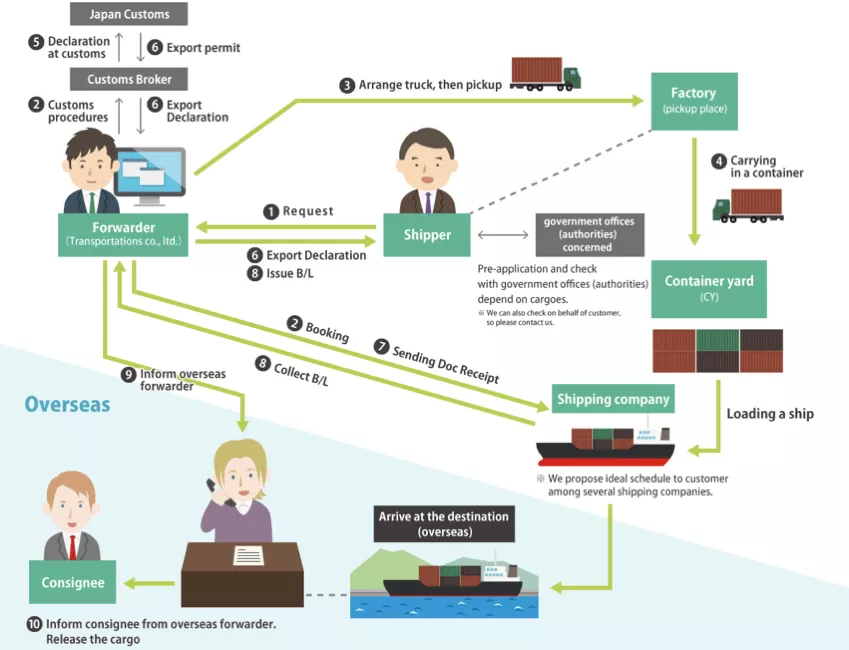
What this permits and forbids
Working through a partner who holds a clean, established NTA license means your product can move through Japan’s import and distribution system without your brand needing to independently verify or manage the underlying licensing compliance — that’s the partner’s ongoing responsibility, not yours.
Why foreign brands rarely hold it directly
Given everything the NTA screens for — financial standing, operational infrastructure, premises, ongoing record-keeping and compliance obligations — almost no foreign brand entering Japan for the first time has a practical reason to pursue direct licensing itself. The screening exists precisely because holding this license is a genuine, ongoing operational commitment, not a formality.
How a partner’s license covers you
JapanPint holds the NTA liquor license as importer of record, operating under COMFYS JAPAN GK with the operational infrastructure, record-keeping, and ongoing compliance standing the NTA’s licensing framework requires. For a foreign brand, that means the licensing burden — and the risk of getting it wrong — sits with an established, accountable operator rather than becoming the brand’s own problem to manage.
Your import partner’s standing with the National Tax Agency is one of the most consequential things about them that’s also one of the easiest to overlook during vetting. It’s worth asking about directly, alongside a review of your own product and labels.
Tell us about your product and SKU range through our contact form, and we’ll review where your brand stands for Japan entry. If you prefer email, you can also reach us at su*****@*******nt.com.