How to Import Alcohol Into Japan: A Step-by-Step Guide for Global Brands
 By
By 
Every foreign brand asking how to import alcohol into Japan faces the same challenge. The process involves several government agencies. Each agency has its own requirements and timelines. No single public source explains the complete process in order.
This guide breaks the process into clear steps. It covers import licensing, food import notification, label compliance, taxes, and customs clearance. You will also see who handles each stage and where delays can occur.
The Four Agencies That Govern Alcohol Imports
What a Foreign Brand Needs to Understand
Alcohol imports into Japan involve several regulatory authorities. Each one controls a different part of the process.
The National Tax Agency (NTA) administers the Liquor Tax Act and liquor licensing system. The Ministry of Health, Labour and Welfare (MHLW) oversees food safety requirements under the Food Sanitation Act. Japan Customs handles customs procedures and duty assessment. The Consumer Affairs Agency oversees food labeling requirements under the Food Labeling Act.
How It Plays Out in the Import Process
No single agency controls every part of an alcohol import. Your shipment may pass through several regulatory checkpoints.
Each checkpoint has different requirements. A missing document or incorrect product detail can delay the shipment. That makes coordination important from the start.
Generalist consultants can also miss important details. Alcohol imports combine customs, food safety, tax, licensing, and labeling requirements. Each area requires specific knowledge.
The Practical Takeaway
Understanding each agency’s role helps you identify potential delays. It also shows which documents you need at each stage.
This preparation can make the first shipment much easier to manage.
Step 1: Secure Import Rights or Choose a Partner
What Happens at This Stage
Before your goods leave the origin country, you need a Japan-based importer. The importer must hold the appropriate liquor business licence and take responsibility for the import process.
You should also consider consulting the relevant quarantine station before shipment. Prior consultation can help identify food safety or documentation issues early.
This step can save time later. It gives the importer a chance to review the product before the shipment enters Japan.
Who Handles What
The importer handles the required filings and regulatory procedures in Japan.
Your brand must provide accurate product information. This includes label artwork, ingredients, product specifications, alcohol content, country of origin, and the final SKU list.
Every later step depends on this information. Keep the product data consistent across all documents.
Where Delays Usually Occur
Problems often start when brands ship before checking Japanese requirements.
A label issue may only become obvious after the goods reach Japan. At that point, the shipment may already sit in a bonded warehouse.
A pre-shipment review costs less than correcting a compliance problem after arrival.
Step 2: Submit the Food Import Notification
What Happens at This Stage
The importer submits a food import notification to the MHLW quarantine station under the Food Sanitation Act.
The notification contains information about the imported product. Depending on the product, this can include ingredients, additives, manufacturer details, and country of origin.
The quarantine station then reviews the notification. The shipment may proceed normally or face additional inspection.
Who Handles What
The Japan-based importer normally handles the notification.
Your brand must provide complete and accurate product information. The importer uses this information when preparing the required documents.
Make sure the information matches the actual product. Differences between the documents and the product can lead to additional questions or checks.
Where Delays Usually Occur
Authorities may select shipments for surveillance or inspection. Some shipments may require sampling and laboratory testing.
An inspection does not automatically mean that the product has a problem. However, testing can add time to the clearance process.
Brands should allow extra time for this possibility when planning their first shipment.
Step 3: Check Label Compliance and Submit the Required Notification
What Happens at This Stage
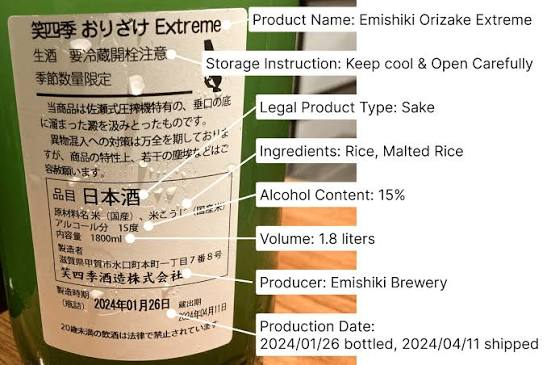
Japanese labeling rules apply to imported alcoholic beverages. Requirements can come from both the Food Labeling Act and the Liquor Tax Act.
Depending on the product, the label may need information such as alcohol content, ingredients, importer details, and required warnings. Japanese-language labeling also plays an important role.
The importer should review the label before shipment. Where required, the importer submits the relevant labeling information to the tax office.
The product must meet the applicable labeling requirements before the importer releases it from bond.
Who Handles What
The importer usually manages Japanese label compliance. This involves more than translating the original label.
The importer must understand the applicable Japanese requirements and adapt the label accordingly. Your brand should then review and approve the final localized artwork.
Keep the approved artwork on file. It can help maintain consistency across future shipments.
Where Delays Usually Occur
Poorly localized labels can cause significant delays.
A simple translation may not satisfy Japanese labeling requirements. The label must also present the required information in the correct way.
For this reason, treat label localization as a compliance task rather than a translation task.
Step 4: Pay Liquor Tax, Customs Duty, and Consumption Tax
What Happens at This Stage
After the shipment meets the required food safety and labeling conditions, the importer moves through customs clearance.
Japan Customs determines the applicable customs duty. The importer also handles liquor tax under the Liquor Tax Act. Consumption tax may also apply.
The exact tax and duty treatment depends on the product category and other import details.
Beer, wine, spirits, and other alcoholic beverages can have different tax treatment. The importer should therefore review the specific product before calculating the final landed cost.
Who Handles What
The importer handles the relevant customs and tax procedures.
Your commercial agreement should clearly state who pays each cost. The importer may pay the charges during clearance and include them in the final import cost.
Accurate calculations require product-specific information. This can include the beverage category, alcohol content, quantity, origin, customs classification, and applicable trade rules.
Where Delays Usually Occur
Incorrect product classification can create problems during customs clearance.
This risk becomes more important for products that do not fit neatly into common categories. The importer should confirm the correct classification before shipment.
Japan’s alcohol tax system also changes over time. The 2026 reform affects the tax treatment of beer and certain beer-like beverages. Importers should check the current rules when planning shipments.
Common Pitfalls That Delay Alcohol Imports
What Goes Wrong and Why
The biggest mistake is treating alcohol import as a single customs procedure.
In reality, several regulatory requirements can apply. Licensing, food safety, labeling, taxation, and customs clearance each require attention.
A problem at one stage can delay the entire shipment.
The Real-World Cost of Getting It Wrong
A shipment can remain in a bonded warehouse while the importer resolves a compliance issue.
Storage charges may continue during the delay. Market entry can also move further away from the original launch date.
For a first shipment, even a small compliance problem can create significant costs and disruption.
How to Prevent Problems Before Shipping
The safest approach is to establish clear responsibility before the goods leave the origin country.
A capable import partner can coordinate licensing, food import notification, label review, customs procedures, and tax clearance.
Your importer should also review the product and SKU list before shipment. This gives you time to correct missing information or labeling issues.
Importing alcohol into Japan follows a defined regulatory process. It involves several agencies, but careful preparation makes the process easier to manage.
Before shipping, review your product category, labels, documents, licensing requirements, and tax treatment. Early preparation can prevent expensive problems after the goods arrive in Japan.
If you need help assessing your products and SKU range for Japan entry, contact JapanPint through its official website.