Can You Sell Alcohol in Japan Without a Japanese Company? What Foreign Brands Need to Know
 By
By 
If you’re a distillery founder or export manager looking at the Japanese market, the first question is usually the most practical one: do you need to set up a company in Japan before you can sell here? The good news is that most foreign brands can sell alcohol in Japan without an entity, because Japan’s import and licensing system is built around a different structure entirely. Understanding how that structure works — and where its limits are — is the difference between entering Japan in months versus stalling out for a year on incorporation and licensing paperwork you didn’t actually need.
The short answer: yes, through an importer of record
What a foreign brand needs to understand
Japan’s alcohol licensing system is tied to the entity that physically brings goods into the country, not to the brand that owns them. The National Tax Agency (NTA) issues the liquor import licence, and that licence sits with a Japan-based importer of record — not with your winery, distillery, or brewery overseas. This is a structural feature of the system, not a workaround.
How it plays out in the import process
In practice, a licensed importer of record files the food import notification with the MHLW quarantine station under the Food Sanitation Act, manages the labeling-method notification, and pays the liquor tax and duty on your behalf. Your brand never needs a Japanese address, a local director, or a registered company to be part of that chain. The importer of record is doing the regulatory work as the legal entity of record.
The practical takeaway
For the overwhelming majority of foreign alcohol brands, the question isn’t “how do I incorporate in Japan” — it’s “who do I partner with as my importer of record.” That reframing alone saves most brands from months of unnecessary legal setup.
Why most foreign brands don’t need a Japanese entity
The direct answer up front
You don’t need a Japanese entity because you’re not the one performing the regulated act. Importing and selling alcohol in Japan requires licences tied to specific business activities — holding the NTA import licence, holding a retail or wholesale liquor sales licence — and a partner already holding those licences can act on your brand’s behalf.
What the answer depends on in practice
The exception is if you plan to eventually operate your own warehousing, run your own retail storefront, or build an in-country sales team under your own name. At that point, incorporation becomes relevant because you’d be the one performing licensed activity directly. But that’s a later-stage decision, not a condition of entry.
A concrete example for a foreign brand
A mid-sized craft brewery in the US wanting to test the Japanese market doesn’t need to open a Tokyo office to get product on shelves. It needs a licensed importer of record willing to bring the product in, handle compliance, and move it into distribution — while the brewery focuses on what it does best, which is making beer.
What an importer of record actually does for you
The direct answer up front
An importer of record is the legal entity that holds the NTA liquor import licence and takes on the compliance obligations that come with bringing alcohol across the Japanese border. It’s not a shipping agent and it’s not a customs broker in the narrow sense — it’s the accountable party for regulatory compliance.
What the answer depends on in practice
That role typically includes prior consultation with the quarantine station at the port of entry — an optional but strongly advised step that de-risks a first shipment by surfacing labeling or documentation issues before the goods physically arrive. It also includes managing inspection or surveillance outcomes, since shipments can face sampling and laboratory testing at a bonded warehouse before they’re released.
A concrete example for a foreign brand
Say a New Zealand winery ships its first pallet to Japan. The importer of record has already filed the food import notification, has affixed compliant Japanese labels before the goods leave bond, and has settled the customs duty, liquor tax, and consumption tax. The winery’s only real involvement was approving the label translation and confirming the SKU list.
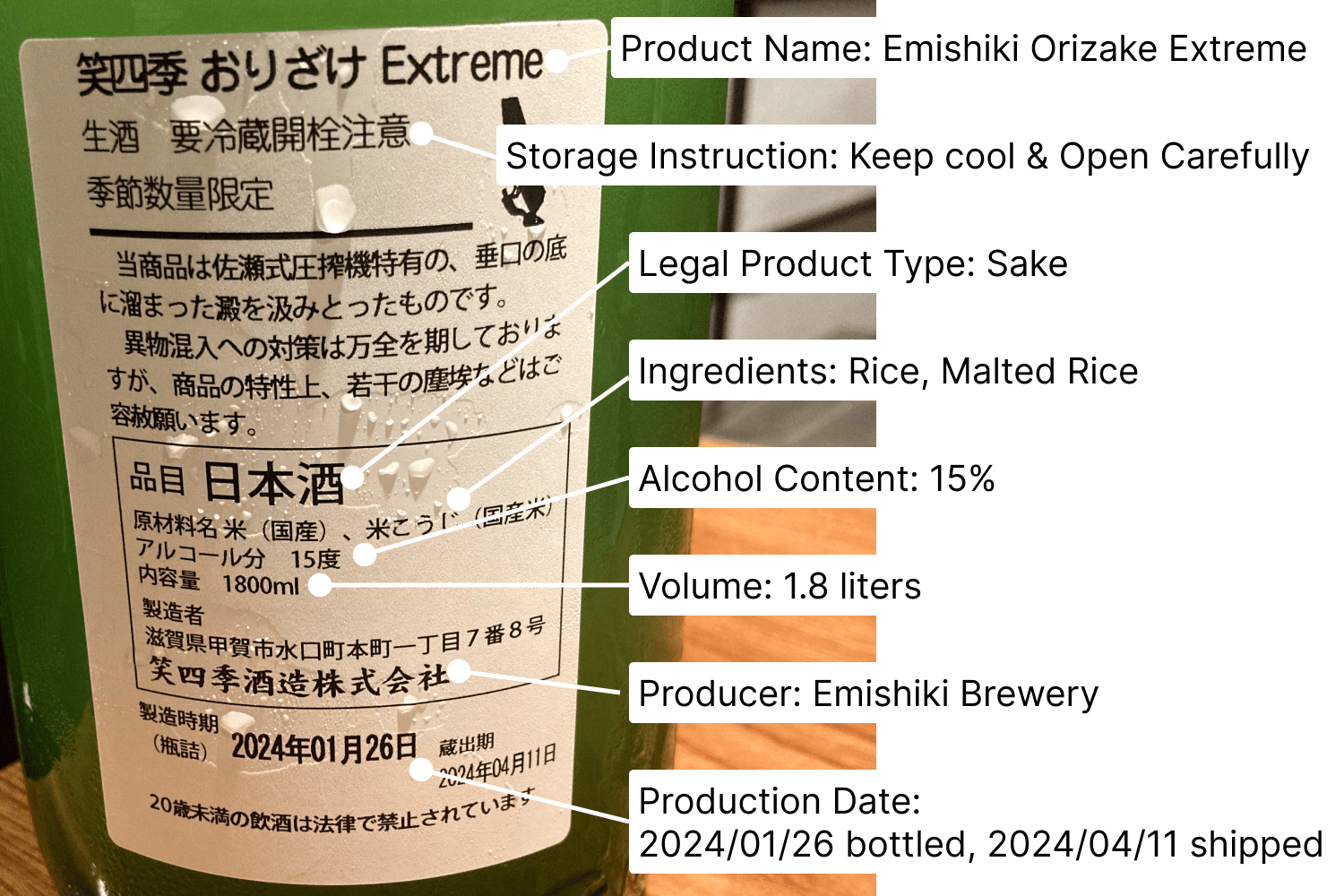
Whether a label clears both the Food Labeling Act and the Liquor Tax Act before it ships is exactly the kind of detail worth checking early — it’s a common point where brands without a knowledgeable partner get stuck.
The two-license reality: import vs. sale
How the two options actually differ
Japan separates the licence to import alcohol from the licence to sell it — they’re not the same permission. An import licence lets an entity bring product across the border and into bonded storage. A separate retail or wholesale sales licence is required to actually move that product into the market, whether that’s e-commerce, on-trade, or retail shelves.
Cost, speed and control trade-offs
Some foreign brands assume they need to hold both licences themselves to have any control over their Japan strategy. In reality, working with a partner who already holds both — the import licence and the distribution relationships — collapses a process that would otherwise require building two separate licensing tracks and the operational infrastructure behind each one.
How to decide which fits your situation
If your goal is to get product into the Japanese market efficiently and test demand, a partner holding both licences is almost always the faster, lower-friction path. If your long-term plan is to run your own dedicated Japan sales operation at scale, that’s a conversation worth having early, since it changes the shape of the partnership you need.
Risks of trying to import without a local partner
What goes wrong and why
The most common failure pattern is a foreign brand assuming their existing international freight forwarder or customs broker can handle Japanese alcohol compliance the same way they’d handle any other product category. Alcohol is a distinctly regulated category — the Food Sanitation Act, the Liquor Tax Act, and the Alcohol Business Act all apply layers most general freight partners aren’t set up to navigate.
The real-world cost of getting it wrong
Labels that haven’t gone through proper label localization and the labeling-method notification can hold a shipment at the bonded warehouse. Products that trigger a random inspection or surveillance order without the right documentation prepared in advance face delays and added cost. None of this is catastrophic, but it’s avoidable — and it’s expensive in time, which for a first shipment often matters more than money.
How to prevent it before you ship
The fix is sequencing: confirm your importer of record, get your labels reviewed against both the Food Labeling Act and the Liquor Tax Act, and use the prior consultation with the quarantine station before goods are en route — not after. Brands that treat these as day-one steps rather than paperwork to handle later avoid almost all of the friction.
How to evaluate a Japan import partner

The direct answer up front
The clearest signal of a genuine alcohol-import operator, versus a generalist consultant handling alcohol as one line item among many product categories, is whether they can speak specifically about the process — prior consultation with the quarantine station, bonded-warehouse sampling, labels affixed before withdrawal from bond — rather than in vague terms about “handling the paperwork.”
What the answer depends on in practice
It’s also worth asking whether the partner only imports, or whether they also distribute. A partner that holds the import licence but hands you off to a separate distributor at that point is still leaving you to build relationships with Japanese wholesalers and retailers on your own — which is often the harder part of entering this market.
A concrete example for a foreign brand
A brand evaluating partners might ask two simple questions: who physically holds the import licence for my shipment, and where does my product actually go once it clears bond? A partner who holds both the licensing and the distribution channel — rather than passing your brand between two different companies — gives you a single point of accountability for the whole journey from your warehouse to a Japanese shelf.
Getting into the Japanese alcohol market doesn’t require a Japanese company — it requires the right importer of record, one who treats compliance and distribution as a single accountable process rather than two separate handoffs. Tell us about your product and SKU range through the contact form on japanpint.com, and we’ll review where your brand stands for Japan entry.